
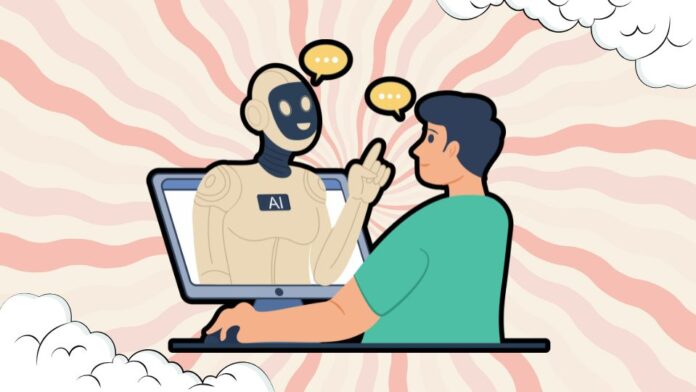

AI assistants are becoming embedded in workplace software, but employees and HR teams still need specialized context when questions involve healthcare coverage, benefits and plan rules. Healthee is addressing that gap with Zoe, Everywhere, a vision for expanding its AI-powered benefits assistant beyond Healthee’s own platform and enabling other workplace AI agents to access benefits-specific expertise.
Healthee’s new strategy builds on an existing trend in enterprise software: employees increasingly interact with AI through the tools they already use rather than through a separate application for every business function.
Zoe, Healthee’s AI-powered health and benefits assistant, is already available through Slack and Microsoft Teams. The company’s new Zoe, Everywhere concept takes that approach further, envisioning Zoe as a specialized benefits intelligence layer that can work alongside other AI assistants and agents.
The centerpiece is Zoe-to-Agent (Z2A), an agent-to-agent model designed to let external AI agents connect with Zoe when they need healthcare and benefits expertise.
The distinction matters because enterprise AI systems are increasingly being designed around specialized agents rather than one general-purpose assistant. An employee might use one workplace AI tool for general questions, scheduling or productivity, while a benefits-focused system maintains the detailed knowledge needed to interpret a health plan.
Under Healthee’s Z2A concept, those systems could work together.
For example, an employee could ask an AI assistant to find an in-network dermatologist and estimate the cost of a visit. Rather than requiring the employee to move between applications, the external agent could consult Zoe for information about the employee’s plan, coverage and potential out-of-pocket costs before returning an answer.
That model could also apply to HR teams.
An HR leader could ask an AI agent about benefits engagement, healthcare spending or plan performance. Zoe could provide the benefits-specific organizational context required to answer the question, while the broader AI agent remains the primary interface.
This represents a shift from the traditional HR software model, where employees are expected to navigate a specific portal to access benefits information. Instead, benefits intelligence could increasingly become an underlying service that other workplace applications can access.
The approach also highlights an emerging challenge for enterprise AI: context specialization. A general-purpose agent may be capable of reasoning across many business tasks, but it does not automatically have access to an employee’s benefits plan, eligibility information or healthcare context.
Specialized agents can fill that gap without requiring every enterprise AI system to independently build and maintain benefits expertise.
For HR departments, the potential value is less about introducing another employee chatbot and more about making benefits information available within existing digital workflows. If employees can access accurate plan information through the workplace assistants they already use, organizations could reduce application switching while making benefits support more conversational.
There are also important implementation considerations. Healthcare and benefits data requires careful handling of privacy, access controls and authorization. Agent-to-agent systems will need clear boundaries around which information can be requested, which agent is allowed to access it and how sensitive employee data is protected.
Healthee describes Zoe, Everywhere as a vision for 2027 rather than a fully deployed agent network. The company’s Slack and Microsoft Teams integrations are available today, while Z2A represents the next stage of its strategy.
The development points toward a broader direction for AI in HR technology: specialized HR agents may increasingly operate as connected services within an enterprise AI ecosystem rather than as isolated applications.
Market Landscape
HR technology vendors are moving beyond standalone chatbots toward AI assistants that can interpret employee questions, retrieve organizational information and automate HR workflows.
Benefits is a particularly complex area because useful answers often depend on employee-specific eligibility, plan design, provider networks, costs and coverage rules. A general workplace assistant may provide a conversational interface, but specialized benefits infrastructure is still required to produce context-aware answers.
Healthee’s approach positions Zoe as that specialized layer. Its agent-to-agent model also reflects the emerging enterprise trend toward interoperable AI agents, where specialized systems exchange context instead of forcing organizations to consolidate every capability into one platform.
For HR technology buyers, the key questions will include integration depth, data governance, authorization, accuracy and the ability to maintain reliable benefits information across changing plans and employee circumstances.
Top Insights
- Healthee’s Zoe, Everywhere expands its AI benefits assistant from standalone interactions toward a broader workplace AI and agent ecosystem.
- Zoe-to-Agent lets other AI agents access specialized benefits and healthcare context rather than independently recreating benefits expertise.
- Employees could potentially ask existing workplace AI assistants benefits questions without switching between multiple HR technology applications.
- HR leaders could use external AI agents to query benefits engagement, healthcare spending and plan performance through Zoe’s organizational context.
- The model raises important enterprise requirements around benefits-data accuracy, privacy, authorization and governance as AI agents become interconnected.
Join thousands of HR leaders who rely on HRTechEdge for the latest in workforce technology, AI-driven HR solutions, and strategic insights





