

Q: When leaders talk about AI-related workforce risk, they often focus on the technology itself. Why do you think workforce visibility is the more urgent issue?
Claire: We’re so focused on the risks of AI models that we’re missing a more immediate problem: many enterprises no longer have a single, reliable view of everyone doing work for them. That includes employees, contractors, vendors, offshore teams and, increasingly, AI agents. Workforce visibility means knowing who or what is doing the work, how they were vetted, what they can access and where accountability sits. Until leaders have that, any AI strategy sits on shaky ground.
Q: What does that look like in practice?
Claire: We’re seeing more fraudulent candidates, misrepresented identities and work being quietly outsourced to people who were never vetted. Gartner warns that by 2028 as many as one in four candidate profiles worldwide could be fake. Experian’s 2026 Future of Fraud Forecast also names employment fraud in the remote workforce as a top trend, driven by AI-generated resumes and deepfake candidates. Traditional hiring checks were never designed for this.
Q: Can you share a recent example?
Claire: On one recent program, our team uncovered and removed 30 fraudulent candidates the hiring company had already cleared. The client was days away from giving systems access and IP to people they did not, in reality, employ. This reflects a wider rise in employment fraud across remote and contingent work. Recent DOJ prosecutions tied to fraudulent remote IT worker schemes have involved hundreds of corporate victims, showing how quickly identity and access risks can scale. AI is making those risks harder to spot by generating tailored resumes, scripting interview answers and adding a level of polish that can make fraudulent candidates look credible.
Q: Why is this happening more now?
Claire: It’s a mix of factors. Work has become more global and distributed, so vendor chains have grown more complex, and that complexity creates more places for risk to hide. Businesses are also under pressure to move fast, which means speed often gets rewarded over verification. AI adds another layer, since it’s now woven into the work itself, shaping how tasks are completed and handed off. When humans, contractors and AI agents are governed by different rules with no single view across them, blind spots open up.
Q: If AI agents are becoming part of the workforce, who is accountable when something goes wrong?
Claire: AI can assist or execute within boundaries, but responsibility must remain with named humans and governed entities. That means clear decision rights, auditability and escalation paths built into the workflow, not just written into policy.
Q: Are most enterprises prepared for this kind of workforce risk?
Claire: In my experience, no. Many organizations have strong policies on paper but limited end-to-end visibility in practice. They may know their permanent headcount, but not everyone (human or digital) who can access their systems. Verification is also often a one-off event, not something monitored continuously.
Q: Where should leaders start? Slow down AI?
Claire: I don’t think slowing AI is realistic or desirable. Leaders need a clearer operating model for how work is governed — one that treats AI the same way you’d treat any other addition to your workforce: with ownership, accountability and oversight.
- Map the critical workflows. Identify who or what is doing each part of the work: human, contractor, vendor, or AI agent.
- Create one source of truth. Don’t manage five different systems of record for what is functionally one workforce.
- Classify by risk. An AI agent drafting internal content isn’t the same risk category as one touching candidate data or making decisions that affect people’s jobs. Treat them accordingly, and review the higher-risk ones before they go into production, not after.
- Keep a human in the loop for anything consequential. AI can assist or execute within boundaries, but final decisions (especially around hiring, access or identity) should sit with a named person who reviewed and approved it, not with the model.
- Assign accountability to named individuals. A senior owner in HR, procurement, and information security should be explicitly responsible for workforce risk across human and digital workers.
- Make this ongoing, not a one-time approval. Audit and review the model at set intervals, monitor where risks are changing, and adjust controls as the workforce evolves.
The goal isn’t to slow innovation. It’s to make sure AI accelerates work without amplifying hidden vulnerabilities.
Q: Workforce transparency is increasingly important for employers. What steps can candidates and employees take to help establish trust, verify their identities and qualifications, and demonstrate that they are the people actually performing the work?
Claire: Transparency is the key word because it helps build trust. Candidates and employees can help by keeping their professional profiles updated and accurate. Even if you’re not posting regularly on LinkedIn, having a current and consistent professional presence matters. It’s also important to be willing to validate your skills, credentials, and identity. That could mean sharing certifications, participating in assessments, providing references, or simply turning on your camera during an interview. These actions help demonstrate authenticity, which is more important than ever in this AI-driven world.
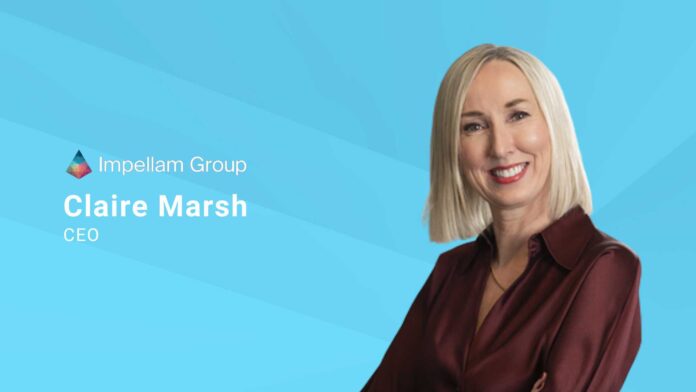
Claire Marsh, CEO of HeadFirst Global NA and Impellam NA
In her role as CEO, Claire leads the company’s strategy, growth, and delivery across the region. A recognized leader in workforce solutions, Claire has driven consistent growth across the North American portfolio while advancing the integration of talent, technology, and AI to help organizations build more agile, future-ready workforces. She oversees solutions supporting nearly $4.6 billion in workforce spend and 2,900 supplier relationships spanning almost 80 countries.





