
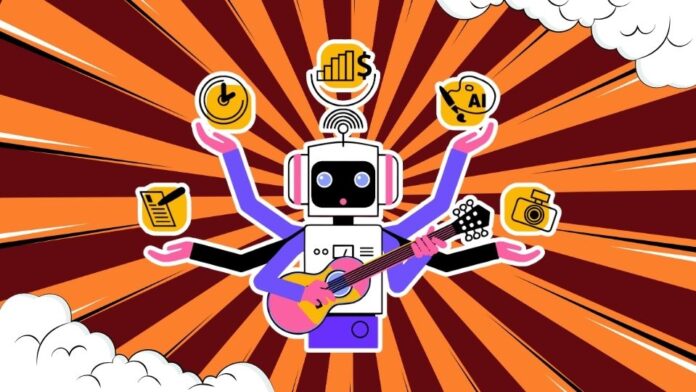

YY Group Holding Limited is changing more than its corporate name. The Nasdaq-listed workforce technology and integrated facility management company is rebranding as YYForce Inc. as it positions itself around AI-enabled workforce management, facility services, human-robot collaboration and commercial automation. The company will also change its Nasdaq ticker from YYGH to YFOR on September 2, 2026.
Corporate rebrands often signal a change in strategy, but for workforce technology providers they can also reveal how the underlying business is evolving. YY Group Holding Limited (NASDAQ: YYGH) is using its latest name change to signal a broader transition—from a regional workforce services company toward an AI-enabled platform combining human capital, facility management and automation.
The company announced that it will become YYForce Inc. on September 2, 2026. Its Class A ordinary shares are expected to begin trading on the Nasdaq Capital Market under the new ticker YFOR when the market opens that day. Until then, the stock will continue trading under YYGH.
For existing shareholders, the transition is administrative rather than structural. The company said no action is required, existing stock certificates remain valid, and its ISIN number will not change.
The more significant development is what YYForce says the new identity represents.
From workforce services to workforce infrastructure
YY Group originally built its business around regional workforce solutions. The company now describes itself as an AI-enabled workforce management platform and integrated facility management (IFM) provider, with operations spanning Asia and other international markets.
According to CEO Mike Fu, the company’s expansion has pushed its business beyond traditional workforce services. Its current model combines a human capital network with IFM services, human-robot collaboration and software designed to help organizations manage people and physical properties more efficiently.
That combination places YYForce in an increasingly interesting segment of HR and enterprise technology: the convergence of workforce management, physical operations and automation.
Traditional HR technology generally focuses on employee records, recruiting, payroll, scheduling and workforce analytics. Facility management software, by contrast, addresses buildings, maintenance, security, cleaning and other physical operations. The emerging opportunity is to connect these layers, particularly for businesses with large frontline or distributed workforces.
AI can potentially serve as the connective layer. Workforce data can inform staffing and scheduling, while automation and robotics can support repetitive physical tasks. For facility operators, that creates the possibility of coordinating human workers, software and machines within a single operating model.
Human-robot collaboration becomes part of the strategy
YYForce’s reference to human-robot co-working models is particularly notable as companies across industries explore automation in labor-intensive environments.
Robotics has historically been concentrated in highly structured industrial settings such as manufacturing and warehousing. Newer systems are moving into commercial environments where tasks are more variable, including cleaning, inspection, delivery and facility operations.
The challenge is not simply deploying robots. Enterprises need to determine which activities should remain human-led, which can be automated and how the two can work together safely and efficiently.
For a workforce management provider, that creates an opportunity to move beyond conventional scheduling and staffing software. A platform could potentially coordinate human availability with automated systems, creating a more integrated approach to managing frontline operations.
That vision also explains why the company’s new name emphasizes “Force.” YYForce says its new identity is intended to reflect its expanding footprint across workforce management, IFM and commercial automation.
A crowded enterprise technology landscape
YYForce enters a competitive environment that includes workforce management specialists, enterprise software companies and facility-management technology providers.
Companies such as Microsoft, Oracle, SAP and Workday have continued to integrate AI into enterprise and workforce applications, while specialized vendors focus on scheduling, employee productivity, field service and workforce analytics.
The distinction for YYForce is its attempt to connect workforce technology with physical facility operations. That could appeal to enterprises where labor and property management are tightly connected—such as hospitality, commercial real estate, retail, logistics and other businesses with geographically distributed operations.
However, combining multiple operational categories also creates technology challenges. Enterprise customers need reliable integrations, accurate workforce data, security controls and clear governance when AI influences scheduling or operational decisions.
The quality of the underlying data becomes particularly important. An AI workforce platform cannot reliably optimize staffing, facilities or automation if the systems feeding it contain incomplete schedules, outdated employee information or disconnected operational data.
What the rebrand means for enterprise buyers
For customers, the immediate impact of the announcement is limited. The corporate name and ticker are changing, but the company says the rebranding does not require shareholders to exchange their securities or take action.
The strategic implications are more relevant for enterprise technology buyers.
YYForce is positioning itself around a model in which people, AI, software and physical automation operate as part of a connected workforce infrastructure. If that strategy succeeds, the company could compete for technology budgets that traditionally sit across separate HR, facilities and operations departments.
That convergence mirrors a broader trend in enterprise technology. AI is increasingly being deployed not simply as an employee productivity tool, but as an operating layer capable of connecting workflows across departments.
The new corporate identity, including the tagline “Forging Forward Together,” will be introduced across the company’s investor-relations materials, digital platforms and physical signage over the coming months.
The rebrand itself will not determine whether YYForce succeeds in the enterprise market. Its long-term test will be whether the company can translate its combination of workforce services, IFM, AI and automation into measurable improvements in labor efficiency, facility operations and customer outcomes.
For HR and operations leaders, that convergence is worth watching. The next generation of workforce technology may not sit entirely inside HR software. Increasingly, it could extend into the physical environments where employees actually perform their work.
Market Landscape
The workforce management market is moving toward a broader AI-enabled workforce operations model. Scheduling, workforce analytics and employee management are increasingly being connected with automation, field operations and physical infrastructure.
Large enterprise platforms such as Microsoft, Oracle, SAP and Workday are embedding AI across HR and business processes. Meanwhile, specialist providers compete through workforce scheduling, talent intelligence, field-service management, facilities technology and automation.
YYForce’s positioning is differentiated by its combination of human capital services, integrated facility management and human-robot collaboration. That creates potential opportunities in industries where workforce availability and physical operations are closely linked.
The enterprise opportunity is also accompanied by significant implementation challenges. AI-enabled workforce systems must account for data quality, employee privacy, cybersecurity, interoperability and human oversight. For organizations adopting these platforms, measurable ROI—not simply the presence of AI—will ultimately determine their value.
The broader trend is clear: workforce technology is expanding from systems that manage employees toward infrastructure that coordinates people, software, facilities and machines.
Top Insights
- YY Group becomes YYForce Inc., reflecting its transition from regional workforce services toward AI-enabled workforce management and integrated facility operations.
- Nasdaq ticker YYGH changes to YFOR on September 2, while existing shareholders retain their shares, certificates and ISIN without taking action.
- Human-robot collaboration is central to the strategy, highlighting the convergence of workforce management, commercial automation and physical facility operations.
- Enterprise workforce technology is broadening beyond HR, connecting staffing, facilities, software and automation across distributed operating environments.
- YYForce will compete across overlapping technology markets, facing enterprise HCM, workforce management, facilities software and automation providers as adoption expands.
Join thousands of HR leaders who rely on HRTechEdge for the latest in workforce technology, AI-driven HR solutions, and strategic insights.





