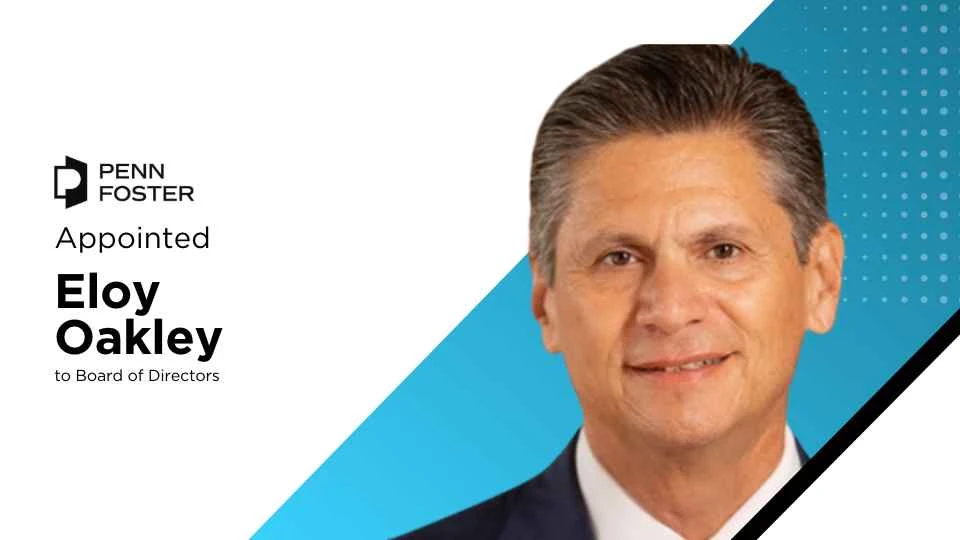
Penn Foster has appointed Eloy Oakley, former chancellor of the California Community Colleges, to its Board of Directors as the career-focused education provider looks to expand access to flexible, workforce-aligned learning. Oakley brings experience in community college leadership, competency-based education, and online learning, including his role in designing and launching California’s first fully online, competency-based public college. His appointment comes as employers and education providers face growing pressure to connect accessible credentials with changing workforce requirements.
Penn Foster Adds Education Leader Eloy Oakley to Board
Penn Foster has appointed Eloy Oakley to its Board of Directors, bringing a prominent higher education leader into its efforts to expand career-focused education and workforce development.
Oakley previously served as chancellor of the California Community Colleges, the largest community college system in the United States. During his tenure, he led the design and launch of California’s first fully online, competency-based public college, giving him direct experience with an education model that places flexible learning and demonstrated skills at its center.
The appointment comes as Penn Foster continues to develop education pathways for working adults, employers, and learners seeking career-relevant credentials outside traditional full-time education. Oakley is expected to advise the institution on expanding access, aligning programs with employer requirements, and improving learner outcomes.
For education providers and HR leaders, the appointment reflects a broader shift toward learning models that accommodate employment commitments while helping workers build skills for changing job markets.
Competency-Based Education Connects Learning With Job Skills
Competency-based education differs from traditional academic models by emphasizing demonstrated mastery of specific skills and knowledge rather than relying exclusively on time spent in a classroom.
For working adults, this approach can offer greater flexibility, particularly when combined with online delivery. Learners may be able to progress through coursework around employment and personal responsibilities while developing capabilities relevant to their chosen careers.
Oakley’s experience with California’s online competency-based college is relevant to this model. His leadership at the California Community Colleges also included initiatives such as the California College Promise and Vision for Success, which focused on expanding access and improving student outcomes.
He currently serves as president and CEO of College Futures Foundation, an organization focused on improving economic mobility through postsecondary education.
His background spans public higher education, institutional leadership, education policy, and nonprofit governance. He has also served on the boards of Western Governors University and MDRC, and advised education companies including Guild Education, OpenClassrooms, and EdVisorly.
The combination of public education experience and exposure to digital learning businesses gives Oakley a perspective on how education providers can build pathways between learning, credentials, and employment.
Working Adults Are a Growing Focus for Career Education
Penn Foster’s strategy centers on learners who need education to fit around existing work and personal responsibilities.
Traditional education pathways can be difficult to access for adults who cannot leave employment to pursue full-time study. Flexible online programs and career-oriented credentials offer another route, although their value depends on whether the skills taught are relevant to employer requirements and recognized within the industries where learners seek work.
Penn Foster’s 2025 Impact Report provides some insight into the outcomes reported by its learners. Program completers who responded to the company’s surveys reported a median salary increase of $18,000. The company also reported that 97% of respondents achieved the goals they set when enrolling, while program completions increased 23% compared with the previous year.
These figures are company-reported results and should be interpreted in the context of the survey respondents and program completers rather than as outcomes for every enrolled learner.
Still, they illustrate the types of measures education providers are using to communicate their impact: completion rates, learner goals, and economic outcomes rather than enrollment alone.
For employers, these measures are relevant to workforce development strategies that increasingly rely on external education partners, professional credentials, and structured upskilling programs.
Education Providers Face Pressure to Align With Employer Demand
The appointment also comes as organizations reassess how they develop talent amid changing technology requirements and persistent skills gaps.
Employers need workers who can adapt to evolving job responsibilities, while education providers must ensure that their programs remain connected to actual occupational requirements. This creates an opportunity for closer collaboration between colleges, training organizations, employers, and workforce development groups.
Oakley’s experience across public education and the private education ecosystem could help Penn Foster navigate this relationship.
He said working learners should not have to choose between earning a paycheck and obtaining a credential. His comments reflect a growing emphasis on education models that allow people to continue earning while building qualifications for career progression.
For HR departments, flexible education partnerships can support internal mobility, employee retention, and skills development. However, the effectiveness of these programs depends on whether credentials translate into recognized capabilities and meaningful employment opportunities.
Digital Learning Is Becoming Part of Workforce Strategy
Online education and competency-based learning are no longer limited to alternative education providers. They are increasingly part of discussions about how organizations prepare employees for new roles and changing skill requirements.
Penn Foster’s approach places career-focused education and flexible delivery at the center of that discussion. Oakley’s appointment adds experience in building large-scale public education pathways and connecting postsecondary learning with economic mobility.
Kermit Cook, CEO of Penn Foster, said Oakley’s record in expanding access to education and improving outcomes for underserved populations aligns with the institution’s mission.
The appointment does not represent a new learning platform or technology launch. Instead, it strengthens the institution’s governance as it continues to develop its education and workforce strategy.
The broader challenge will be translating flexible access into measurable career outcomes. As employers place greater emphasis on demonstrable skills, education providers will need to show that their credentials help learners progress into jobs, improve earning potential, and adapt to evolving workplace demands.
Market Landscape
The workforce education market is increasingly focused on flexible learning, competency-based credentials, and stronger connections between education providers and employers.
Key developments include:
- Competency-based education: Programs increasingly emphasize demonstrated skills and learning outcomes rather than relying solely on traditional academic structures.
- Online workforce learning: Digital delivery allows working adults to pursue education without necessarily leaving employment.
- Employer-aligned credentials: Organizations are looking for training pathways that address specific occupational requirements and support internal talent development.
- Education-to-employment pathways: Colleges, training providers, and employers are exploring partnerships that connect credentials with career opportunities.
- Learner outcome measurement: Completion rates, employment progression, and salary outcomes are becoming important indicators of education program effectiveness.
Penn Foster’s appointment of Oakley reflects the strategic importance of combining flexible education delivery with workforce relevance and measurable learner outcomes.
Top Insights
- Penn Foster appointed former California Community Colleges Chancellor Eloy Oakley to its Board of Directors to support its workforce education strategy.
- Oakley helped design and launch California’s first fully online, competency-based public college.
- Penn Foster’s 2025 Impact Report says surveyed program completers reported a median salary increase of $18,000.
- The company reported a 23% increase in program completions and said 97% of surveyed respondents achieved their enrollment goals.
- The appointment highlights growing interest in flexible education pathways that connect working adults with career-relevant credentials.
Join thousands of HR leaders who rely on HRTechEdge for the latest in workforce technology, AI-driven HR solutions, and strategic insights