
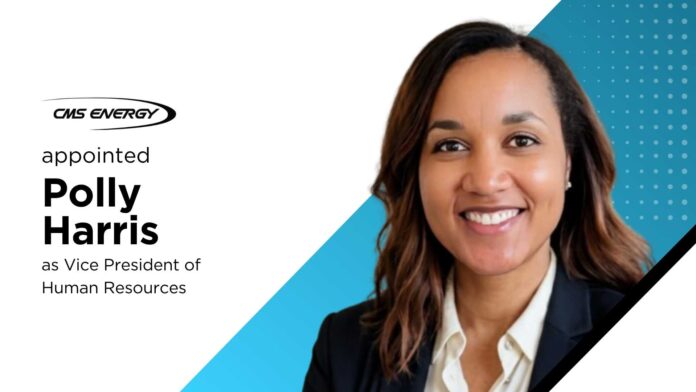

CMS Energy has appointed veteran HR executive Polly Harris as its new vice president of human resources, effective July 20, strengthening the company’s executive leadership as utilities increasingly invest in workforce transformation, talent development, and employee experience. Harris joins from Union Pacific Railroad, bringing more than two decades of human resources leadership across industrial and infrastructure-focused organizations.
Utility companies are placing greater emphasis on workforce strategy as they navigate digital transformation, evolving labor markets, and the transition to a cleaner energy economy. Reflecting that trend, CMS Energy has named Polly Harris as vice president of human resources, with her appointment taking effect on July 20.
Harris joins the Michigan-based energy company after serving as vice president of human resources at Union Pacific Railroad, where she played a key role in enterprise HR leadership for one of North America’s largest transportation organizations. Her appointment signals CMS Energy’s continued investment in leadership capable of managing workforce modernization, talent development, and organizational transformation across a complex operational environment.
She succeeds into the role with more than 20 years of HR experience spanning manufacturing, consumer goods, transportation, and infrastructure sectors—industries where workforce planning, operational excellence, and employee engagement are closely tied to business performance.
Leadership experience across industrial enterprises
Before joining CMS Energy, Harris spent more than 18 years at Union Pacific, overseeing people strategies supporting both unionized and salaried employees. Her experience includes workforce planning, succession management, organizational design, employee relations, compensation and benefits, leadership development, and workplace culture initiatives.
Earlier in her career, Harris held human resources positions at John Deere and Conagra Brands, broadening her expertise across manufacturing and consumer products before transitioning into transportation.
Her academic background includes a bachelor’s degree from the University of Iowa, an MBA from the University of Phoenix, and executive education through the Advanced HR Executive Program at the Michigan Ross School of Business.
HR leadership becomes a strategic business function
The appointment comes at a time when HR leadership is expanding beyond traditional personnel management into a broader strategic role focused on workforce resilience, digital transformation, and organizational agility.
Across industries including energy, manufacturing, logistics, and utilities, HR executives are increasingly responsible for aligning workforce capabilities with business modernization initiatives. That includes overseeing talent acquisition, leadership development, employee experience, workforce analytics, and skills planning as organizations adapt to automation and changing labor market dynamics.
CMS Energy highlighted Harris’ experience in enterprise transformation, employee wellbeing, workforce engagement, HR operations, and culture development as key qualifications supporting the appointment.
The company also emphasized her background leading HR strategies for large operational workforces, including expertise in succession planning, organizational effectiveness, compensation, employee relations, and workplace safety.
Workforce transformation in the energy sector
The energy industry faces a unique combination of workforce challenges.
Utilities must replace retiring skilled workers while simultaneously developing capabilities in digital operations, renewable energy, cybersecurity, grid modernization, and data analytics. As these priorities expand, HR leaders are becoming central contributors to long-term business strategy.
Modern utilities are also adopting digital HR technologies—including workforce analytics, AI-assisted recruitment, learning platforms, and employee experience solutions—to improve operational efficiency and strengthen talent pipelines.
Major enterprise software providers such as Microsoft, Oracle, SAP, Workday, and Salesforce continue expanding AI-powered HR capabilities that help organizations automate administrative processes, forecast workforce needs, and support leadership decision-making through predictive analytics.
Talent strategy remains a competitive differentiator
Organizations competing for skilled technical talent increasingly view employee experience and leadership development as competitive advantages rather than administrative functions.
According to Gartner, attracting and retaining qualified talent remains one of the highest priorities for executive leadership, particularly as organizations confront ongoing skills shortages and changing employee expectations. Meanwhile, McKinsey & Company has found that companies investing in organizational health and leadership capability are generally better positioned to navigate business transformation and long-term performance challenges.
For utilities such as CMS Energy, effective HR leadership can influence operational continuity, workforce engagement, safety performance, and succession planning across highly specialized technical roles.
Harris’ appointment reflects a broader industry trend in which HR executives are expected to serve as strategic partners supporting enterprise transformation rather than solely managing personnel functions.
As energy providers continue modernizing infrastructure and investing in digital technologies, leadership appointments that strengthen workforce strategy are likely to remain a priority. The integration of people strategy with business transformation has become increasingly important as organizations seek to build resilient, future-ready workforces capable of supporting long-term operational growth.
Market Landscape
The utility sector is accelerating investment in workforce modernization as digital transformation, energy transition initiatives, and demographic shifts reshape labor requirements. HR technology platforms supporting workforce analytics, AI-enabled recruitment, skills intelligence, succession planning, and employee experience have become strategic investments for enterprise organizations. According to Gartner, talent shortages continue influencing executive priorities across capital-intensive industries, while McKinsey & Company identifies leadership capability and workforce resilience as key drivers of successful organizational transformation. HR leaders increasingly play a central role in aligning workforce strategy with long-term business objectives.
Top Insights
- CMS Energy has appointed Polly Harris as vice president of human resources, bringing more than two decades of enterprise HR leadership experience across transportation, manufacturing, and industrial sectors.
- Harris’ background includes workforce planning, organizational transformation, succession management, employee engagement, and HR operations supporting both unionized and salaried workforces.
- The appointment reflects growing recognition that HR executives play a strategic role in supporting digital transformation, workforce modernization, and long-term business resilience.
- Utilities are increasingly investing in HR technology, workforce analytics, and talent management to address skills shortages and prepare employees for evolving operational requirements.
- Enterprise organizations continue elevating HR leadership as workforce strategy becomes essential to navigating labor market challenges and organizational change.
Join thousands of HR leaders who rely on HRTechEdge for the latest in workforce technology, AI-driven HR solutions, and strategic insights





