
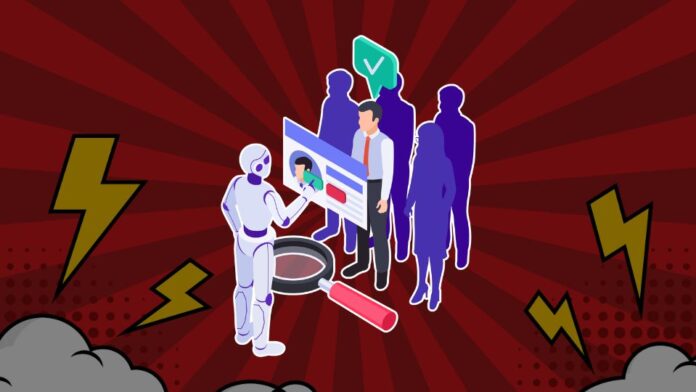

HR service technology is moving beyond answering employee questions toward systems that can execute routine work across multiple applications. Rezolve.ai has been recognized as a Luminary in Everest Group’s Innovation Watch: Agentic AI Applications in HR, highlighting the growing role of agentic AI in employee service workflows, approvals and HR operations.
The next phase of AI in human resources may be less about generating answers and more about completing the work that follows them.
Rezolve.ai, which provides an agentic AI service desk for IT, HR and Finance, has been recognized by Everest Group as a Luminary in its Innovation Watch: Agentic AI Applications in HR, published August 27, 2026.
Everest Group’s report examines 25 agentic AI providers in HR, looking at areas including innovation priorities, the progression of capabilities from concept to production, underlying technology, differentiated HR use cases and the investments and partnerships supporting the market.
The recognition puts Rezolve.ai within a broader shift in HR technology toward AI systems that can move from conversational assistance into workflow execution.
From Employee Questions to Completed Work
Traditional HR service portals generally require employees to search for information, submit cases or navigate forms.
Agentic AI introduces another model: an AI system can interpret a request, retrieve information, coordinate actions across connected applications and escalate the matter when human judgment or approval is required.
Rezolve.ai’s platform is designed around that approach.
The company says employees can access its service through channels including Microsoft Teams, Slack, email and voice. Its AI agents use approved organizational knowledge to answer questions, while also coordinating tasks across connected systems.
The platform applies role and approval controls, escalates sensitive or ambiguous cases to people and records actions for review and audit.
That combination is important for HR because many employee-service requests are not simply information searches.
A question about benefits, payroll or company policy can lead to a case, an approval, a system update or communication with another HR team. An agent that can coordinate those steps potentially reduces the number of handoffs between employees, HR service teams and enterprise applications.
Agentic AI Meets HR Governance
The move from generative AI to agentic systems also raises a different set of requirements.
A chatbot can provide an incorrect answer. An AI agent with permission to execute an action can create a more consequential error.
That makes governance, permissions, auditability and human escalation central to HR agent deployments.
Rezolve.ai says its platform is designed to operate within defined roles and approval controls, with actions recorded for review. Sensitive or unclear cases can also be escalated to human employees.
For HR departments, these controls matter in areas involving payroll, employee records, benefits, compliance and other sensitive workforce information.
The practical question is therefore not simply whether an AI agent can perform a task, but whether the organization can define what the agent is allowed to do, what requires approval and when a person must take over.
Targeting High-Volume HR Workflows
Rezolve.ai identifies several HR use cases for its model, including recurring questions about policies, benefits and payroll, as well as onboarding, offboarding, case intake, approvals and employee communications.
These workflows share a common characteristic: they are often repetitive but can require information from multiple systems or teams.
Automating those interactions is one reason agentic AI is attracting attention across enterprise software.
Instead of replacing the underlying HR systems, an agent can potentially act as a service layer across them. That positions agentic AI alongside existing HCM, payroll, IT service management and employee experience infrastructure.
Rezolve.ai’s public customer examples include an anonymous HR assistant for TotalEnergies Denmark and JLL’s Ask Ethics experience, which the company says supports approximately 100,000 employees.
Those examples are company-reported deployments rather than independent measures of platform performance.
A Growing HR Agent Market
Everest Group’s assessment of 25 providers also points to an expanding market for agentic AI applications in HR.
The competitive landscape includes established HCM vendors such as Workday, SAP and Oracle, employee-service and workflow platforms, and newer AI-native providers focused on specific HR processes.
The market is still developing, and the distinction between AI assistants, copilots and autonomous agents is becoming increasingly important. The defining issue is the level of action an AI system can take—not simply whether it can hold a conversation.
For HR technology leaders, that makes workflow design and governance as important as the underlying AI model.
Rezolve.ai’s recognition illustrates where the market is heading: employee service is evolving from a destination where workers find information into an operational layer that can potentially understand requests, perform approved tasks and involve people when decisions require human judgment.
Market Landscape
Agentic AI in HR is emerging as a new layer across employee service, HR operations and enterprise workflows.
HCM platforms such as Workday, SAP SuccessFactors and Oracle Cloud HCM are incorporating AI into employee and workforce processes, while specialist providers are developing agents for service delivery, recruiting, case management and workflow automation.
The technology creates opportunities to automate high-volume administrative work, but it also introduces governance requirements around permissions, employee data, approvals, audit trails and human oversight.
The emerging competitive question is shifting from “Can AI answer employees?” to “What work can AI safely complete for them?”
Top Insights
- Rezolve.ai was recognized as a Luminary in Everest Group’s Innovation Watch covering agentic AI applications in HR.
- Everest Group’s report examines 25 providers across technology maturity, innovation, HR use cases and commercial development.
- Rezolve.ai’s platform combines conversational employee support with workflow execution across connected enterprise systems.
- The platform supports HR use cases including payroll and benefits questions, onboarding, offboarding, approvals and case intake.
- Role controls, approval workflows, human escalation and audit records are central considerations as AI moves from answering to acting.
Join thousands of HR leaders who rely on HRTechEdge for the latest in workforce technology, AI-driven HR solutions, and strategic insights





