

1. 49% of learners have maintained a routine for months but still struggle to apply what they learned in practice. That’s a significant failure rate for an industry built around enabling skill development. What is happening in that gap between completing a lesson and needing to use the skill?
You can spend months learning something and still get stuck when it’s time to use it. We call that the “Progress Gap,” the distance between feeling like you’re making progress in a lesson and feeling confident using that skill in real life. With languages, you might understand the exercise perfectly but then aren’t able to follow a conversation because the other person is speaking too quickly or asks something you weren’t expecting. Lessons need to give people opportunities to try, make mistakes, and get feedback in situations that mimic how real conversations actually go. For employers, that’s the part worth measuring. Completion rates won’t tell you whether someone can actually lead a meeting in their second language.
2. You described the challenge as what happens “when you close the app, leave the lesson, and need to use what you’ve learned in a real-life situation.” What breaks down at that transition point and what does research tell you about learning experiences produce people who can make that transition reliably?
In a lesson, you usually know what you’re being asked to do and have support along the way. In a real conversation, you have to find the words yourself and respond in the moment. A tutor helps bridge that gap by giving you someone to practice with who can spot where you hesitate, correct you in real time, and help you build confidence.
In our report, 46% of learners said human feedback or accountability helps them stay consistent, more than any other factor we asked about. By comparison, just 18% pointed to AI reminders or tools.
3. 88% of professionals surveyed already use AI as part of their learning. Yet 66% agree that having access to information doesn’t automatically lead to progress. Is it a capability gap, a design gap, or something fundamental about how AI learning is being approached?
I think it’s less about a capability or design gap and more about what we expect AI to do. AI is very good at giving us information, explaining a grammar rule, or telling us why a phrase works, but understanding an explanation is different from being able to use what you’ve learned in the moment. That part comes from practice.
One finding that stood out to me was that people who use AI daily were actually more likely than people who never use it to say it’s harder than ever to know what really works, 58% versus 47%. So having more answers, faster, doesn’t necessarily make people more confident that they’re making progress.
We know that AI is already very good at exam-style-like drills where there’s a right answer, for example, and we’re starting to see studies showing it can improve test performance after even a short session. What we have to be careful about is being clear on what those studies are actually measuring.
If someone spends an hour practicing GRE problems and takes a test immediately afterward, compared with someone who did no practice at all, that tells us something about short-term performance. It doesn’t tell us whether they retained what they learned a week later, can apply it in a different context, or made any long-term progress. When you take away the things human tutors are particularly good at, like seeing the whole learning experience over time, keeping someone motivated and adapting to their needs as they evolve, you’re only comparing a very narrow part of the problem. That’s why we think about AI as part of the learning experience, rather than the learning experience itself.
4. 90% of respondents want AI to play a supporting role rather than lead their learning. What does that tell you about the design direction for AI in learning and where is the industry currently misreading what learners want from AI?
It tells me that people can use AI regularly and still want a person involved in their learning. We found that even among daily AI users, 83% wanted human guidance to remain central. That makes sense to me as you might turn to AI for a quick explanation or extra practice, but you still want a teacher who knows what you’re working toward to help you when you lose confidence or feel stuck. The more capable AI becomes, the more opportunity there is to combine what it does well with the guidance and support that people value from a teacher.
5. The finding that 31% of Gen Z say learning with AI feels passive rather than active is specific and important for any platform targeting that demographic. What design changes produce active learning rather than passive consumption?
With a tutor on Preply, there are more moments where learners have to try something themselves before getting the answer. With languages, that might mean practicing a conversation you’ll need to have at work, getting feedback on where you struggled, and then trying again.
We’re designing our AI tools around that same principle. They give learners more opportunities to actively use what they’re learning between lessons, whether that’s practicing a real-world scenario or building on something that came up in a lesson.
The important part is that the learner is still doing the work. For us, the opportunity with AI isn’t to remove that effort, but to create more opportunities for additional practice.
6. 75% of respondents trust a learning experience that combines AI and human expertise, compared with just 11% who prefer a fully AI approach. That’s a clear market signal. What does a well-designed human-plus-AI learning experience look like?
It starts with a teacher who understands your goals, plus AI tools that help you keep practicing between lessons. Say you’re learning English because you want to speak up more in work meetings. Your tutor can practice those conversations with you, notice where you struggle, and help you work through it. Between lessons, you might use AI to review unfamiliar phrases or rehearse before a meeting. You can use our Lesson Insights, for example, to get feedback on where you need to improve. You can then talk through how it went with your tutor and work on anything you found difficult.
7. As CBO, you’re responsible for how Preply communicates its value in a market where most competitors are moving toward fully automated AI learning. How do you build a brand position around that without sounding like you’re arguing against technology in an industry that’s moving fast toward it?
We’re fully embracing AI, both in our product and in how we work as an organization, with a clear point of view. The greatest potential comes when AI enhances human expertise rather than replaces it.
That’s something we’re very intentional about at Preply. We don’t believe learning, or modern work, requires choosing between humans and technology. It’s about bringing together what each does best. AI can make experiences more personalized, efficient and scalable, while real human interaction brings the context, motivation and connection that help people make real progress.
That’s the position we’re building our brand around. We’re not putting humans against AI, but showing what becomes possible when the two work together.
8. Senior leaders are more likely to want AI to lead their learning compared with junior employees. That’s counterintuitive, you might expect less experienced learners to be more comfortable with AI learning. What does that reversal tell you about the relationship between learning confidence and AI dependency?
Our survey found that 16% of senior leaders are more likely to want AI to lead their learning compared with 8 to 10% of junior employees, so most leaders still want a person guiding their learning.
We also saw that senior leaders use AI for learning more than anyone, 47% daily compared with 31% of non-managerial employees. The survey doesn’t tell us why, so we don’t want to necessarily interpret that as greater confidence or dependency.
What it might be telling us is that leaders could be experiencing AI very differently from the people on their teams. For those making decisions about learning tools for an organization, it’s important to understand how different people learn, where they’re getting stuck, and what kind of support they need.
Bio:
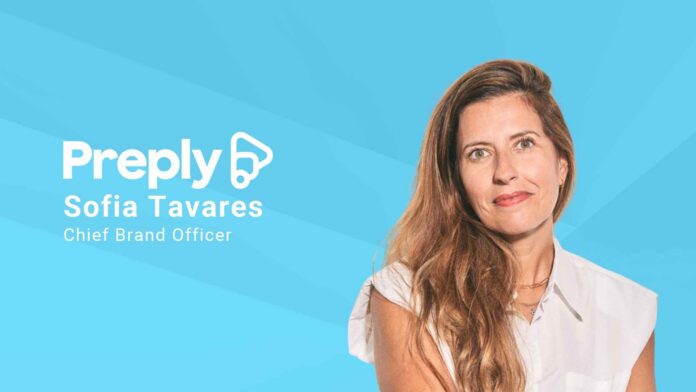
Sofia Tavares is the Chief Brand Officer at Preply, leading the company’s transformation into a globally recognized brand. She has two decades of experience in international FMCG organizations and earned a Drum award for Best Design in 2021. Originally from Portugal, Sofia holds a Master’s in Marketing and Commercial Management from Fundació Politècnica de Catalunya and a Bachelor’s in Marketing from IADE. She is fluent in eight languages.
Company Bio:
Preply is a human-led, AI-enabled language learning platform. Its global network includes more than 150,000 tutors teaching over 90 languages to learners in 180 countries. The platform combines human tutoring with always-on, AI-powered tools to help learners make progress with every lesson.





