
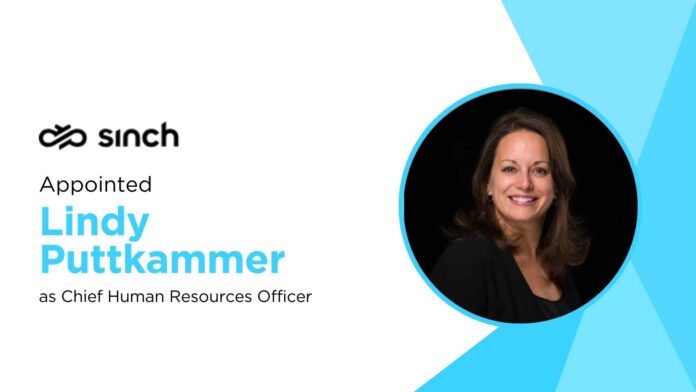

Sinch is betting on institutional knowledge and internal leadership as it plans its next chapter of global growth.
The communications and customer engagement platform provider has named Lindy Puttkammer as its new Chief Human Resources Officer, effective January 1, 2026. Puttkammer will report directly to CEO Laurinda Pang, succeeding current CHRO Christina Raaschou, who will remain through February 2026 to ensure a smooth transition.
The appointment underscores Sinch’s focus on stability and continuity at a time when many global tech firms are still recalibrating their workforce strategies after years of acquisitions, restructuring, and rapid expansion.
A Strategic Internal Promotion
Puttkammer joined Sinch in 2024 as Head of HR Americas and quickly expanded her remit, most recently leading the company’s global Compensation and Benefits function. Her promotion reflects a deliberate choice to elevate a leader who already understands Sinch’s culture, operating model, and regional complexities.
CEO Laurinda Pang emphasized that point directly, noting that Puttkammer’s combination of business insight and HR expertise made her the right choice to lead Sinch’s people function forward.
In an era where many CHRO appointments come from outside industries—or even outside HR altogether—Sinch’s decision stands out as a vote of confidence in internal succession planning.
Experience Built for Scale
Before joining Sinch, Puttkammer spent more than a decade at Lumen Technologies, where she held senior leadership roles including Vice President of Talent Acquisition and Vice President of Human Resources. That background is particularly relevant for Sinch, which has grown rapidly through acquisitions and operates across multiple regions and regulatory environments.
Her experience spans core HR disciplines, from talent acquisition and workforce planning to compensation strategy—areas increasingly critical as global companies compete for scarce skills while managing cost pressures and evolving employee expectations.
Puttkammer holds a Master of Education (M.Ed.) with a specialization in HR Studies from Colorado State University, reinforcing her foundation in both organizational development and people strategy.
Leadership Transition With Minimal Disruption
The timing and structure of the transition appear designed to minimize disruption. Outgoing CHRO Christina Raaschou, who has held the role for four years, will stay on through February 2026, allowing for overlap and knowledge transfer.
Raaschou played a key role during a formative period for Sinch, particularly in integrating acquisitions—a critical task for a company that has expanded aggressively to build its global communications platform. Pang credited Raaschou with shaping Sinch’s culture and people strategy during that phase, signaling continuity rather than a strategic reset.
Such extended handover periods are becoming more common in large, globally distributed organizations, where HR leadership transitions can ripple across talent, compliance, and cultural initiatives.
Why This Matters Now
CHRO roles have evolved dramatically over the past decade. Today’s HR leaders are expected to balance talent strategy, culture, workforce analytics, and transformation—often while navigating geopolitical uncertainty, hybrid work expectations, and AI-driven change.
For Sinch, promoting a leader with deep internal knowledge suggests a desire to keep momentum rather than pivot sharply. As the company continues to scale and integrate its operations, consistency in people leadership can be a competitive advantage—especially in retaining senior talent and maintaining engagement across regions.
It also reflects a broader trend in HR leadership: companies increasingly value CHROs who combine operational credibility with cultural fluency, rather than relying solely on external change agents.
The Bigger Picture
While executive HR appointments rarely generate splashy headlines, they often signal how a company views its workforce in the long term. Sinch’s decision to elevate Puttkammer suggests confidence in its current people strategy and a belief that the next phase of growth requires refinement, not reinvention.
As global tech firms face renewed pressure to align talent strategy with sustainable growth, Sinch’s approach offers a clear message: leadership continuity, internal development, and deep organizational understanding still matter..
Join thousands of HR leaders who rely on HRTechEdge for the latest in workforce technology, AI-driven HR solutions, and strategic insights




