
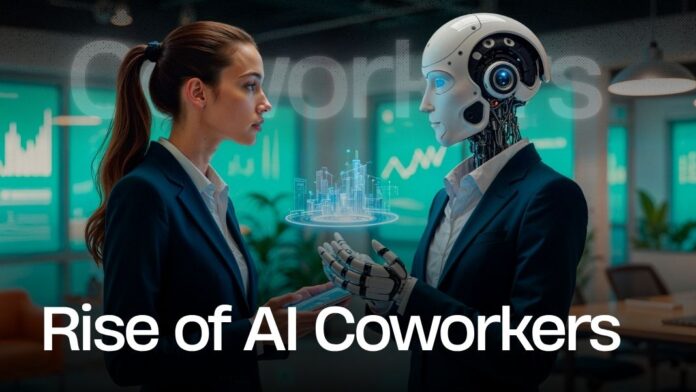

The workplace is undergoing a subtle but profound shift. AI is no longer just a background tool automating repetitive tasks—it is stepping into roles that resemble those of human employees. From scheduling meetings and analyzing data to drafting communications and even managing workflows, AI is beginning to function as a “digital coworker.”
This evolution raises a fundamental question for HR leaders: Are organizations truly ready to integrate AI as part of the team?
From Tools to Teammates
Traditional automation was task-oriented—execute a command, produce an output, and stop. Today’s AI systems, particularly autonomous agents and copilots, go further. They can interpret context, make decisions within defined parameters, and collaborate across workflows.
In practice, this means AI is no longer just assisting employees—it is actively contributing alongside them.
The New HR Playbook
As AI becomes embedded in daily operations, HR teams must rethink several foundational practices:
- Onboarding isn’t just for humans anymore: Organizations must establish clear frameworks for deploying AI systems—defining roles, access, and boundaries.
- Performance management evolves: How do you measure the “performance” of an AI agent? And more importantly, how do you evaluate the human-AI collaboration?
- Accountability becomes complex: When AI contributes to decisions, ownership must still be clearly assigned to human stakeholders.
Ethics and Trust in a Hybrid Workforce
The introduction of AI coworkers also brings new ethical challenges. Bias in AI outputs, lack of transparency, and over-reliance on automation can erode trust if left unaddressed.
HR leaders will play a critical role in ensuring that AI is deployed responsibly, with governance models that prioritize fairness, explainability, and human oversight.
Redefining Collaboration
Perhaps the most significant change is cultural. Employees must learn not just to use AI—but to work with it. This requires new skills, from prompt engineering to critical evaluation of AI-generated outputs.
Organizations that invest in AI literacy and foster a collaborative mindset will be better positioned to unlock the full potential of this hybrid workforce.
Looking Ahead
The future organization chart may not distinguish sharply between humans and machines. Instead, it will reflect an interconnected ecosystem of capabilities—where AI enhances human creativity, and humans provide judgment and direction.
The rise of AI coworkers is not a distant possibility. It is already here. The question is no longer whether AI will join the workforce—but how effectively organizations will adapt to this new reality.




