
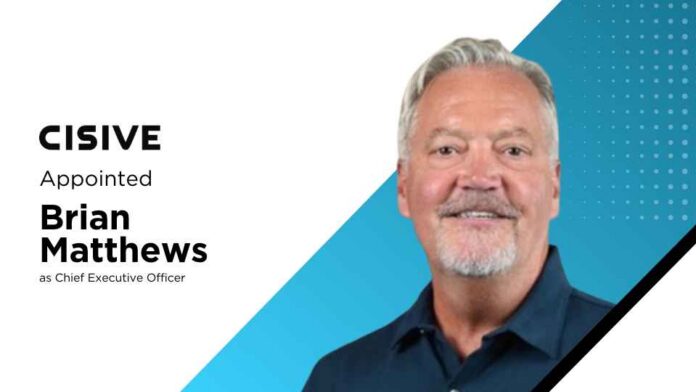

Cisive has appointed Brian Matthews as its new Chief Executive Officer, replacing Margaret Keane, who will remain on the company’s Board of Directors. Announced on November 2, 2026, the leadership change brings an executive with extensive experience in data analytics, SaaS platforms, and background screening into the top role as the company looks to strengthen its workforce screening and monitoring capabilities.
Cisive’s CEO Appointment Signals a Focus on Data-Driven Workforce Risk Management
Cisive’s leadership transition comes at a time when employment background screening is becoming a more strategic component of enterprise workforce management. Employers increasingly need more than pre-employment criminal record checks. They are looking for connected systems that can support identity verification, employment and education verification, ongoing workforce monitoring, regulatory compliance, and hiring risk assessment.
Matthews brings experience that aligns with this broader shift. At itel, he led a transformation from a services-oriented business into a data and analytics platform serving the property and casualty insurance industry. Before that, he served as President of Appriss Insights, a SaaS data analytics and information provider whose customers included organizations in background screening, government, healthcare, legal services, and commercial markets.
His experience across these businesses gives him exposure to two important areas of enterprise technology: large-scale data management and the delivery of specialized information services to regulated industries.
For Cisive, the appointment could create an opportunity to bring those capabilities closer to its core screening operations. However, the company has not announced specific product launches, acquisitions, or technology investments under Matthews’ leadership.
Background Screening Is Becoming a Broader Technology Function
The background screening industry is evolving beyond its traditional role in recruitment. Employers increasingly need technology that supports workforce risk management throughout the employee lifecycle, rather than relying exclusively on checks conducted before someone joins an organization.
This is particularly relevant in healthcare, transportation, and financial services, where employees may work with vulnerable populations, sensitive information, regulated assets, or safety-critical operations.
For HR departments, the challenge is coordinating screening requirements across recruitment, onboarding, employee records, and ongoing compliance. Disconnected systems can create administrative overhead, inconsistent records, and delays in hiring decisions.
Cisive operates in this market through background screening, drug and health screening, workforce monitoring, and specialized healthcare screening services through its PreCheck division. Its technology-first approach combines automation, data services, compliance intelligence, and human expertise.
Matthews’ background at Appriss Insights is particularly relevant because data analytics platforms depend on the quality, accessibility, and practical application of information. Applying similar thinking to workforce screening could help Cisive strengthen the way customers access and use screening intelligence.
That remains a strategic possibility rather than a confirmed product roadmap.
AI and Automation Are Raising the Stakes
Artificial intelligence is changing recruitment workflows, from candidate sourcing and resume screening to applicant communication and workforce analytics. Background screening providers are also operating in an environment where employers expect faster processing without sacrificing accuracy or regulatory safeguards.
Research from SHRM’s 2025 Talent Trends report found that 51% of organizations use AI to support recruiting activities. Among HR professionals whose organizations use AI in recruitment, 89% reported time savings or improved efficiency.
These figures illustrate why screening companies are under pressure to modernize their technology infrastructure. Faster hiring processes increasingly depend on the ability to integrate information across different recruitment and workforce systems.
However, automation does not eliminate the need for human oversight. Background screening involves sensitive personal information, and incorrect records or poorly managed decision-making processes can have serious consequences for applicants and employers.
Gartner’s July 2025 research adds another dimension: only 26% of surveyed job candidates said they trusted AI to evaluate them fairly. The finding highlights a growing trust challenge for employers adopting automated recruitment technologies.
For companies such as Cisive, the opportunity is not simply to introduce more automation. It is to combine operational efficiency with accurate information, transparent processes, and appropriate compliance controls.
Compliance Remains a Competitive Differentiator
Employment background screening operates within a complex regulatory environment. In the United States, the Fair Credit Reporting Act (FCRA) establishes requirements for consumer reporting agencies and employers using background reports for employment decisions.
The framework includes disclosure, authorization, accuracy, consumer rights, and adverse-action requirements. Employers must also consider applicable federal, state, and local anti-discrimination rules.
This makes compliance capabilities an important part of the value proposition for screening providers.
For enterprises operating across multiple locations, managing different screening requirements can be particularly demanding. Healthcare organizations, for example, may need to coordinate professional credential verification and other workforce checks alongside standard employment screening.
Cisive’s experience in regulated verticals could therefore provide an important foundation for its next phase of growth. Matthews’ challenge will be to translate that industry positioning into measurable improvements in customer experience, technology integration, and service delivery.
What Matthews’ Appointment Could Mean for Cisive
The leadership transition also marks a change in direction following Margaret Keane’s tenure.
Keane joined Cisive’s Board in 2022 and became CEO in April 2025. During her leadership, the company strengthened its position in regulated markets and invested in technology, AI initiatives, strategic partnerships, and leadership development.
Her continued board involvement provides some continuity as Matthews takes responsibility for the company’s next stage.
The new CEO’s experience at itel and Appriss Insights suggests a potential emphasis on data-driven services, platform development, and operational transformation. These capabilities are increasingly relevant as workforce screening becomes more closely connected with broader HR technology ecosystems.
Integration with human capital management (HCM), applicant tracking systems (ATS), payroll platforms, and identity verification tools will remain important considerations for enterprise customers. Microsoft, Oracle, and other enterprise software providers have helped establish expectations around connected business applications and interoperable data environments.
For Cisive, the competitive challenge will be demonstrating how its specialized screening and compliance capabilities can complement these wider enterprise technology environments.
The appointment itself does not establish a new product strategy. What it does provide is a CEO with relevant experience in transforming data-intensive businesses.
Ultimately, Matthews will be judged on whether Cisive can turn that experience into better screening workflows, stronger workforce intelligence, reliable compliance processes, and tangible value for enterprise customers.
For HR technology buyers, the appointment is worth watching as background screening continues to move closer to the center of workforce technology strategy.
Market Landscape
The workforce screening market is moving toward connected, data-driven risk management.
| Market development | Implication |
|---|---|
| AI-enabled recruitment | Greater demand for automated, accurate screening workflows |
| Workforce monitoring | Screening requirements extend beyond initial hiring |
| Regulatory complexity | Compliance expertise becomes a competitive advantage |
| HCM and ATS integration | Buyers expect connected HR technology ecosystems |
| Data analytics | Employers seek actionable workforce risk intelligence |
Competitive context: Cisive operates in a market that includes established providers such as First Advantage, Sterling, and HireRight. Its opportunity lies in differentiating through specialized industry expertise, compliance capabilities, and workforce monitoring.
Top Insights
-
Leadership transition: Brian Matthews succeeds Margaret Keane, bringing more than 20 years of experience across data analytics, SaaS, and background screening.
-
Platform opportunity: Matthews’ experience transforming itel into a data and analytics business could inform Cisive’s future technology and service strategy.
-
AI adoption: SHRM reports that 51% of organizations use AI in recruiting, increasing demand for efficient and reliable screening workflows.
-
Compliance priorities: FCRA requirements, data accuracy, candidate rights, and regulatory complexity remain central to enterprise background screening.
-
Market direction: Workforce screening is expanding beyond pre-employment checks toward continuous monitoring, integrated HR systems, and enterprise risk management.
Join thousands of HR leaders who rely on HRTechEdge for the latest in workforce technology, AI-driven HR solutions, and strategic insights





