
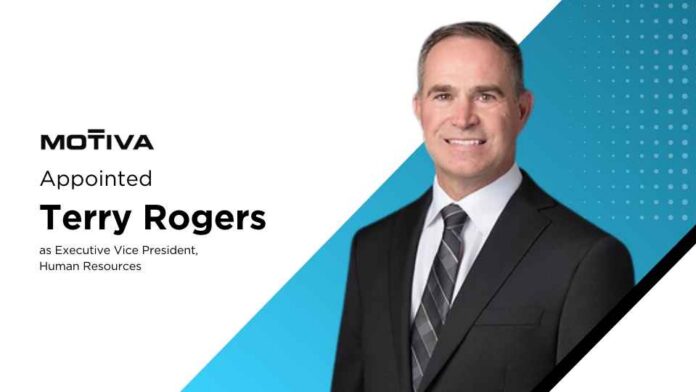

Motiva Enterprises LLC has appointed Terry Rogers as Executive Vice President of Human Resources, effective November 1, 2026. Rogers will join the company’s Executive Leadership Team and oversee workforce strategy, human resources, labor relations and employee development. The appointment also expands his involvement in corporate governance, with Rogers serving as secretary to the Board’s Talent and Compensation Committee and advising directors on talent and culture matters. His promotion comes as the energy company focuses on workforce development, employee engagement and long-term talent retention.
Motiva Appoints Terry Rogers as Executive VP of Human Resources
Energy company promotes internal leader to oversee workforce strategy, labor relations and talent development
Motiva Enterprises LLC has appointed Terry Rogers as Executive Vice President of Human Resources, placing an experienced energy-sector HR leader on its Executive Leadership Team. The appointment took effect November 1, 2026.
Rogers will lead Motiva’s human resources and workforce functions, with responsibilities spanning employee development, engagement and long-term workforce success. He will also serve as Secretary to the Board’s Talent and Compensation Committee and advise the Board on talent and culture matters.
The appointment gives HR leadership a formal role in the company’s executive decision-making structure and connects workforce priorities with board-level discussions on talent and compensation.
Internal Promotion Reflects Energy-Sector Workforce Experience
Rogers brings more than two decades of human resources and labor relations experience across the energy industry. He joined Motiva Enterprises in 2019 and has held several leadership positions with increasing responsibility.
Most recently, he served as Director of Human Resources, Industrial Relations and Technical Learning. In that role, he led labor relations strategy, technical workforce development and enterprise initiatives supporting the company’s operations and longer-term objectives.
Before joining Motiva, Rogers held HR leadership positions at Flint Hills Resources and Valero.
His experience across industrial relations and technical learning is relevant to Motiva’s workforce requirements, which include maintaining specialized capabilities and managing employee relations in an operationally complex industry.
The promotion also represents an internal leadership transition rather than an external executive recruitment. Rogers’ familiarity with Motiva’s workforce and business operations may provide continuity as he takes responsibility for the broader HR organization.
HR Leadership Moves Closer to Board-Level Talent Decisions
One notable aspect of the appointment is Rogers’ role as Secretary to the Board’s Talent and Compensation Committee.
The position places him in a governance process focused on talent and compensation matters, while his advisory responsibilities give him a channel to contribute to board discussions about workforce priorities and organizational culture.
For large employers, this connection between HR leadership and corporate governance can be important as talent decisions increasingly intersect with business performance, leadership succession, compensation structures and organizational risk.
In energy and industrial businesses, workforce planning also involves specialized technical skills, labor relations and the continuity of operational knowledge. HR leaders must balance employee development with business requirements, workforce availability and changing skills needs.
Motiva has not disclosed changes to its compensation strategy, succession planning processes or workforce structure as part of Rogers’ appointment. The announcement establishes his expanded responsibilities but does not outline specific new HR programs.
Technical Learning and Workforce Development in Energy
Rogers’ previous responsibility for technical workforce development is particularly relevant to the energy sector.
Refining and industrial operations depend on employees with specialized technical knowledge, safety awareness and operational experience. Developing and retaining those capabilities requires structured training, knowledge transfer and workforce planning.
The energy industry is also navigating technological and operational changes that can affect the skills required across engineering, maintenance, manufacturing and corporate functions.
For HR teams, this creates a need to connect technical learning with longer-term talent strategies. Training programs must address immediate operational requirements while preparing employees for changes in processes, equipment and digital systems.
Rogers’ background in technical learning and industrial relations gives him experience across two important dimensions of this challenge: developing workforce capabilities and managing the employment relationships that support business operations.
However, Motiva has not announced a new technical training platform, AI-enabled HR system or workforce technology deployment alongside the appointment. The development is primarily an executive leadership change.
Talent Retention and Organizational Culture
Motiva President and CEO Jeff Rinker described Rogers as a leader with expertise in human resources, labor relations and organizational development.
Rinker also pointed to Rogers’ experience building teams, encouraging collaboration and addressing complex workforce challenges. He said the company expects the new HR chief to help strengthen its culture and support efforts to attract, develop and retain talent.
These priorities reflect broader pressures on HR leaders in industrial sectors. Employers must compete for technical talent while maintaining employee engagement, supporting career development and ensuring that workforce capabilities remain aligned with business needs.
The role of the EVP of Human Resources is therefore not limited to traditional personnel management. It involves connecting workforce planning, labor relations, leadership development and organizational culture with the company’s wider business objectives.
Rogers’ appointment gives Motiva an executive leader with an established internal track record to oversee these responsibilities.
Strategic Outlook
The appointment highlights the importance of experienced HR leadership in energy businesses where technical skills, labor relations and operational continuity are closely connected.
Rogers’ move from Director of Human Resources, Industrial Relations and Technical Learning to EVP broadens his remit from specific workforce functions to enterprise-wide people strategy and board-level talent discussions.
The next phase will depend on how Motiva translates its stated priorities around employee development, engagement and retention into workforce programs and measurable outcomes.
For HR leaders across industrial sectors, the appointment illustrates how workforce strategy is increasingly tied to executive governance and long-term organizational planning.
Market Landscape
Motiva’s leadership change reflects several workforce priorities in energy and industrial businesses:
-
Technical workforce development: Specialized industrial roles require ongoing training, skills development and operational knowledge transfer.
-
Labor relations: HR leadership must manage complex employee and labor relationships while supporting business continuity.
-
Executive-level talent strategy: Workforce planning, leadership succession and employee retention increasingly feature in senior business discussions.
-
Board-level compensation oversight: HR leaders can contribute workforce and organizational insight to board committees responsible for talent and compensation.
-
Employee engagement and retention: Employers need to develop career opportunities and workplace cultures that help retain experienced technical employees.
Motiva’s announcement is primarily an executive appointment, not a new HR technology or workforce platform launch.
Top Insights
-
Motiva appointed Terry Rogers as Executive Vice President of Human Resources, effective November 1, 2026.
-
Rogers joins the Executive Leadership Team and will oversee workforce and human resources functions across the company.
-
His responsibilities include serving as secretary to the Board’s Talent and Compensation Committee.
-
Rogers previously led human resources, industrial relations and technical learning at Motiva.
-
His appointment highlights the connection between technical workforce development, labor relations and enterprise talent strategy in the energy sector.
Join thousands of HR leaders who rely on HRTechEdge for the latest in workforce technology, AI-driven HR solutions, and strategic insights





