
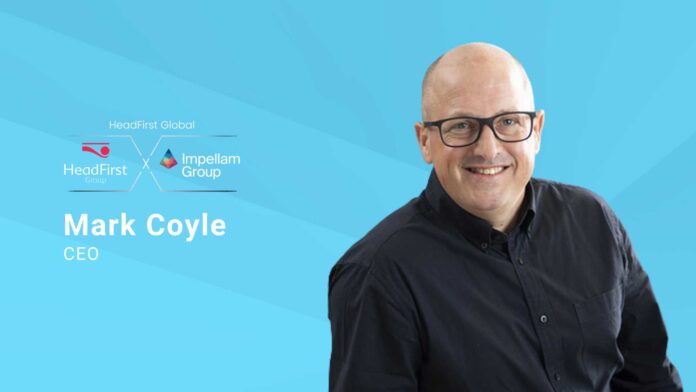

Q1. Where does workforce strategy belong now?
Mark: Workforce strategy now belongs in the P&L. It is still shared across HR, procurement and finance, but in practice it is increasingly being shaped by whoever controls spend and risk. This is shifting more influence toward the CPO and CFO, particularly as organisations rethink their mix of permanent employees, contractors, offshore talent and AI-enabled work.
HR remains critical, but its role is evolving, from owning the agenda to shaping the skills, capability and workforce model organisations need to stay competitive. The businesses that get this right will be the ones that stop treating workforce decisions as separate HR, procurement or finance conversations.
Q2. How do you get procurement to engage beyond cost?
Mark: Companies must stop talking about talent in isolation and start linking it to commercial outcomes. That is the language procurement budgets understand. Better talent means faster delivery, and faster delivery has a revenue impact. A poor contractor experience leads to attrition, re-hiring, re-onboarding and lost knowledge, which all create cost leakage. Once you show how contractor quality affects delivery, productivity and risk, it stops being an HR conversation and becomes a business performance conversation.
Q3. What’s the biggest blocker to cross-functional workforce planning?
Mark: Ownership, or the lack of it. HR looks after people, procurement looks after suppliers, and finance looks after cost. Each mandate makes sense, but none covers the entire workforce, so end-to-end planning remains fragmented by design.
In Australia, that fragmentation is compounded by the regulatory environment itself. We don’t have one labour market, but rather a patchwork of state-based rules sitting on top of a national one, and reforms like the Fair Work “Closing Loopholes” changes are forcing organisations to rethink how contingent labour gets structured in the first place. When ownership is split, and the rules keep moving, workforce planning stays fragmented.
Q4. How do you make governance a competitive advantage rather than a constraint?
Mark: You need to start by treating governance as enablement, because that is what good governance should provide. Pre-approved pathways and clean data create speed. A model that works in one region and can be repeated in another creates scale. And knowing you can deploy talent or AI without legal risk building quietly in the background creates confidence. The programmes that win in this market are the ones that can move quickly without surprises. That is a governance outcome before it is anything else.
Q5. If you were designing the ideal total workforce model from scratch, what would it look like?
Mark: It would be one operating model covering three types of work: permanent employees for core capability, contingent talent for flexible capacity, and agentic or services-based delivery for outcome-based work. The key is not to manage those categories separately, but to bring them together through a single demand intake, supply ecosystem and data layer, so organisations can see what work needs to be done, where the right capability sits, and how it should be delivered. The technology to do much of this already exists. It can solve a large part of the visibility, orchestration and compliance challenge. The harder part is the underlying operating model change, and that is where many organisations get stuck.
Q6. How exposed are organisations on contingent workforce, really?
Mark: More than many realise, and often without full visibility. Statement-of-work leakage, supplier-led hiring, or contractor arrangements that sit outside the formal process can create blind spots that don’t surface until something forces them into view. Most organisations have governance on paper, but far fewer have true visibility in practice. That gap is where the risk sits.
The challenge is particularly sharp in Australia, where organisations rely heavily on contingent labour and operate within a complex regulatory environment. With reforms such as Closing Loopholes increasing scrutiny, and global specialist talent from markets like India becoming a larger part of how local skills shortages are addressed, businesses are often managing compliance risks across multiple labour markets without a clear end-to-end view.
Q7. What does a productive HR–Procurement–Finance conversation look like in 2026?
Mark: Businesses have to look at one dataset through three lenses. HR should be looking at capability and skills. Procurement should be looking at supply, governance and risk. Finance should be looking at cost and return. The questions may be different, but they need to be asked from the same set of numbers.
That is what separates a productive conversation from a political one. If each function is working from its own data, the conversation quickly becomes fragmented. If they are working from the same view, the discussion becomes much clearer: what work needs to be done, which channel is best placed to deliver it, and at what cost.
Q8. What actually separates the workforce platforms that deliver from the ones that don’t?
Mark: Adoption is the first test. A platform can look impressive in demos, but if hiring managers work around it, its capabilities do not matter. The best platforms fit into the way work is actually requested, approved and delivered.
The second test is whether it drives action. A useful platform should help teams decide whether to hire, redeploy, re-source or change approach. A weaker one simply reports what has already happened.
In the end, the question is whether the platform changes behaviour at the point of demand. If it does not, it risks becoming an expensive reporting tool rather than something that improves workforce decisions.





