Halfpricesoft.com has enhanced its ezPaycheck payroll software with features aimed at small and midsized businesses handling mid-year payroll transitions and year-end tax reporting. The desktop platform combines payroll calculations, check printing and federal tax-form preparation under a fixed annual licensing model rather than a monthly subscription.
Small and midsized businesses changing payroll systems during the year can face a particularly awkward administrative problem: moving employee records and year-to-date payroll information without disrupting tax reporting. Halfpricesoft.com is targeting that use case with new features for its ezPaycheck payroll software, while also expanding tools for year-end tax preparation.
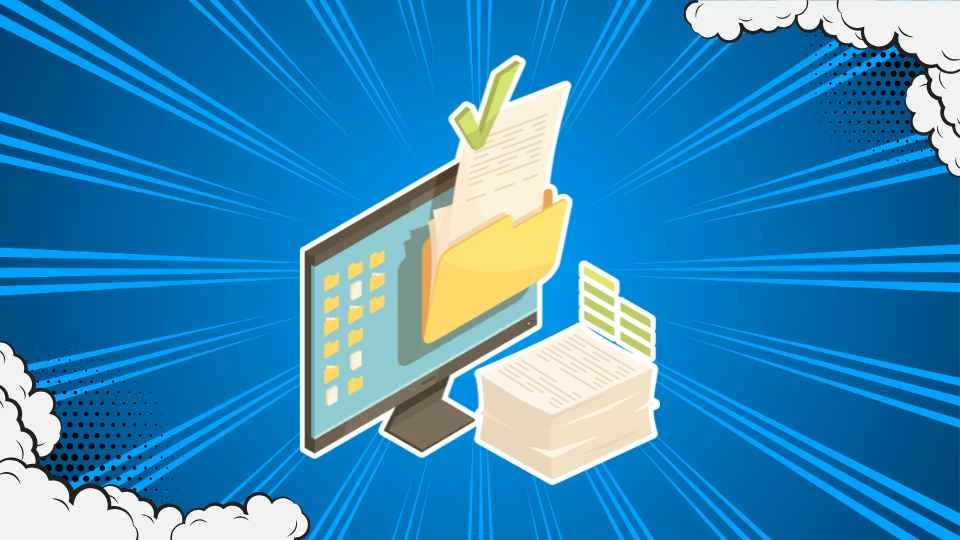
The company says the updated desktop application is designed to let businesses import existing employee information, year-to-date earnings and tax deductions at any point during the calendar year. That makes the software relevant not only to companies starting payroll from scratch, but also organizations moving from another payroll provider partway through the year.
ezPaycheck combines payroll calculations, tax deductions, paycheck printing and tax-form preparation in an in-house application. Halfpricesoft says the software calculates federal, state and local payroll taxes and can generate Forms W-2, W-3, 940, 941 and 943. Its current product documentation also says the software generates reports that businesses can use when preparing state and local tax forms.
The company is positioning the product as an alternative to subscription-based payroll services, particularly for businesses that want a fixed annual software cost. Halfpricesoft currently lists a single-user ezPaycheck license at $169 per calendar year, with additional workstation licensing available for multi-user deployments.
That pricing strategy puts the product on a different path from cloud payroll platforms such as Gusto, which currently charges a monthly base fee plus a per-person fee for its basic payroll plan. Gusto’s published 2026 pricing starts at $49 per month plus $6 per person for its Simple plan.
The difference is not simply price. It reflects two competing approaches to payroll software.
Cloud platforms generally emphasize automated tax filing, employee self-service, integrations and continuous software updates. Desktop payroll software can appeal to businesses and accounting professionals that prefer to retain payroll data locally and manage processing internally.
Halfpricesoft says ezPaycheck does not require a monthly subscription and can support multiple company accounts on the same computer without an additional charge for each company. The company’s documentation says each company account can support up to 500 employees.
The new mid-year functionality addresses one of the more practical challenges in switching payroll systems. Employers changing providers partway through a year need accurate historical payroll data because tax forms and reporting depend on cumulative wages, deductions and withholding rather than only transactions processed after the migration.
Year-end reporting adds another layer. The IRS requires employers to file Form W-2 for qualifying employees and Form W-3 to transmit W-2 information to the Social Security Administration. For 2026, the IRS also requires electronic filing of W-2 forms when the employer meets the applicable 10-return threshold.
That means payroll software has to do more than calculate net pay. Businesses need systems that preserve year-to-date information, produce appropriate tax forms and support the reporting obligations associated with those calculations.
ezPaycheck’s approach includes printing W-2, W-3, 940, 941 and 943 forms. The company also offers an e-file add-on for Form 941, while its documentation makes an important distinction around state and local compliance: the software can generate reports to help users prepare those filings but does not fill in every state and local paper form.
That limitation illustrates one of the trade-offs between a lower-cost desktop application and a full-service payroll provider. Businesses using software such as ezPaycheck may retain more responsibility for understanding local filing requirements and completing filings that fall outside the software’s supported forms.
For accountants and payroll professionals managing several smaller clients, however, a fixed-license model can have a different appeal. Halfpricesoft says ezPaycheck supports unlimited company accounts on the same computer under its standard licensing model, while its multi-user version allows payroll data to be shared across users.
The software also supports customized paycheck layouts, including company logos, signatures and MICR lines, and can print on blank or pre-printed check stock.
For HR teams, the product is less focused on employee experience or broader human capital management than platforms such as Workday, ADP or other cloud HCM suites. Its core proposition is narrower: keep payroll calculations and tax reporting inside a relatively lightweight application.
That positioning could resonate with smaller employers that do not need a broader HR technology stack or that prefer to avoid adding another recurring software expense.
At the same time, the payroll market is moving toward increasingly integrated systems. Providers are combining payroll with benefits, time tracking, onboarding, HR administration and employee self-service. That makes the desktop model a more specialized proposition rather than the direction of the mainstream enterprise market.
Halfpricesoft is betting that there remains a segment of SMBs and accountants that values control, fixed costs and in-house payroll processing. Its enhanced mid-year migration and year-end tax capabilities strengthen that proposition by addressing two points in the payroll lifecycle where data accuracy and compliance are particularly important.
Market Landscape
The small-business payroll market is increasingly divided between cloud-based payroll-as-a-service and lower-cost desktop or locally managed software.
Cloud platforms such as Gusto bundle payroll with tax filing, HR and benefits and use recurring subscription pricing. Desktop products such as ezPaycheck instead emphasize fixed annual licensing, local data storage and direct payroll processing.
The trade-off is flexibility versus responsibility. Cloud services can automate more compliance and payroll administration, while desktop software can offer businesses greater control over their data and costs. For accountants and SMBs with relatively straightforward payroll requirements, that distinction can be significant.
The compliance environment also continues to evolve. The IRS’s 2026 W-2/W-3 guidance reinforces the importance of accurate year-end reporting and electronic filing for employers that meet the applicable threshold.
Top Insights
- Halfpricesoft enhanced ezPaycheck with features aimed at mid-year payroll transitions and year-end tax preparation.
- The desktop software supports employee YTD data, payroll calculations, paycheck printing and multiple federal payroll tax forms.
- ezPaycheck uses an annual licensing model, currently listed at $169 for a single installation.
- The product can generate W-2, W-3, 940, 941 and 943 forms, while state and local filing capabilities vary.
- The update highlights a continuing choice between subscription-based cloud payroll platforms and locally managed payroll software.
Join thousands of HR leaders who rely on HRTechEdge for the latest in workforce technology, AI-driven HR solutions, and strategic insights