Mezmo Technologies has launched Bridge Live, an AI-powered captioning app designed to give deaf and hard-of-hearing professionals real-time captions during face-to-face workplace conversations. The product expands Mezmo’s accessibility technology beyond phone and online meetings into offices, conferences and spontaneous interactions.
Workplace accessibility technology has largely followed the shift toward digital meetings, but employees with hearing loss still face a different challenge when the conversation moves back into the physical workplace. Mezmo Technologies is addressing that gap with Bridge Live, an application that provides real-time captions on smartphones and tablets during in-person conversations.
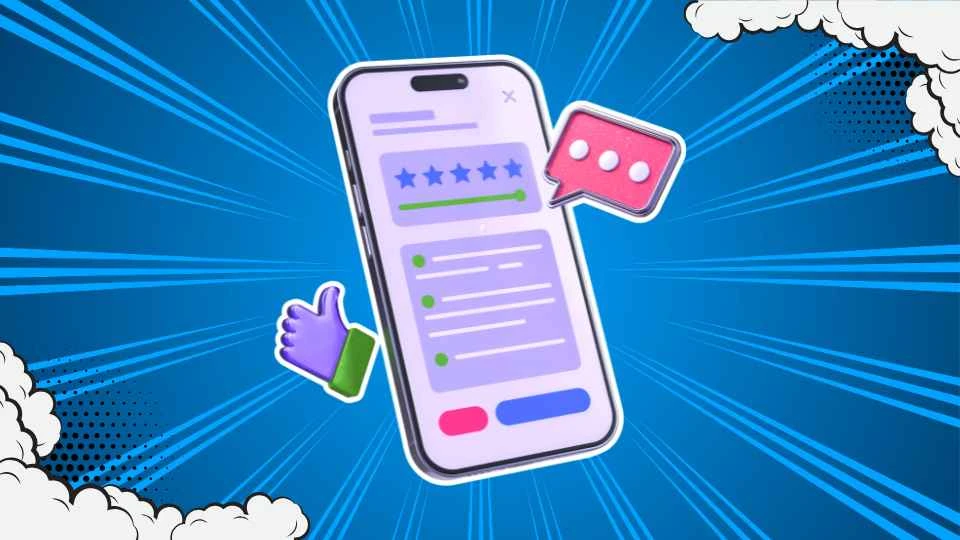
The company says Bridge Live is designed for deaf and hard-of-hearing professionals who need immediate captioning during meetings, presentations, conferences and informal workplace discussions. Rather than requiring specialist equipment or advance scheduling, users can open the application, tap a microphone button and begin receiving captions.
The launch extends Mezmo’s existing Bridge product, which provides live captions for business phone systems and meeting platforms. Bridge connects to a user’s work phone or computer and delivers captions to an iPhone or iPad. Bridge Live adds an in-person use case, potentially giving organizations a more consistent accessibility solution across different working environments.
The need is substantial. According to the National Institute on Deafness and Other Communication Disorders, millions of Americans have some degree of hearing difficulty, while workplace accommodation requirements under the Americans with Disabilities Act can require employers to provide reasonable accommodations for qualified employees with disabilities. The appropriate accommodation depends on the individual’s circumstances and the job.
For workplace technology teams, the challenge is balancing accessibility with speed and practicality. Captioning built into smartphones and operating systems can be useful for everyday situations, but professional conversations can place greater demands on transcription speed, readability and accuracy. Human captioning services such as Communication Access Realtime Translation, or CART, can provide highly accurate transcription but generally require advance coordination.
Bridge Live is positioned between those approaches. Mezmo says its AI speech-recognition technology generates captions in real time without requiring configuration or specialized hardware. The application supports more than 50 languages when connected to the internet and lets users increase the font size for easier reading across a conference table or room.
A live-sharing feature is another important part of the product. Users can generate a QR code or link so another person can view the captions through a browser without installing the application. That could be useful in meetings involving several deaf or hard-of-hearing participants, conference breakout sessions or discussions where accessibility needs are not known in advance.
For HR departments, this matters because workplace accessibility increasingly extends beyond formal accommodations and into the design of everyday employee experiences. A worker may have appropriate technology for a video call but still encounter barriers during a hallway conversation, all-hands presentation or meeting in an unfamiliar location.
Technology can reduce some of that friction, although it does not replace the employer’s responsibility to determine and provide appropriate accommodations. The U.S. Equal Employment Opportunity Commission notes that employers may need to provide reasonable accommodations that enable qualified employees with disabilities to perform essential job functions, subject to applicable requirements.
Mezmo also emphasizes privacy. The company says Bridge Live does not log audio or store transcripts and uses SOC 2-aligned security controls. It describes the service as HIPAA compliant as well. Those claims are company-provided and are particularly relevant for enterprises where conversations can contain confidential employee, customer or business information.
The product also includes an administrative portal for organizations to provision users and manage security settings. That enterprise-management layer distinguishes Bridge Live from consumer transcription applications that employees might otherwise use independently.
The broader competitive landscape includes operating-system accessibility features, specialist captioning providers, meeting platforms and AI transcription tools. Microsoft, Google and Apple have all expanded automatic captioning and accessibility capabilities across their software ecosystems. But those capabilities are typically embedded within broader communication platforms rather than designed specifically around workplace accommodation workflows.
The distinction is important as hybrid work evolves. An employee may spend part of the week in Microsoft Teams, another portion in a conference room and the rest moving between informal conversations. Accessibility can break down when technology only covers one of those environments.
AI speech recognition is making it increasingly practical to extend captioning into those gaps. At the same time, organizations need to evaluate accuracy, latency, privacy, language support and reliability rather than treating automated transcription as interchangeable with professional human captioning.
For HR and IT leaders, Bridge Live therefore represents more than another transcription application. Its value proposition is continuity: giving employees a way to access real-time spoken communication regardless of whether the interaction takes place through a phone, online meeting or physical conversation.
That aligns with a broader shift in HR technology toward employee-specific workplace experiences. Accessibility tools are increasingly becoming part of the technology stack supporting employee experience, inclusion and productivity rather than being treated as isolated specialist systems.
Mezmo estimates that Bridge Live can make spontaneous conversations more accessible by removing the need to arrange captioning in advance. Whether AI captioning can consistently deliver the accuracy required for every professional situation will depend on factors such as background noise, speakers talking simultaneously and the complexity of the conversation.
Still, the direction is clear. As employers bring more people back into offices while retaining hybrid work, accessibility technology has to work across both environments. For deaf and hard-of-hearing professionals, that means captioning cannot stop when the video call ends.
Bridge Live’s launch illustrates how AI-powered speech recognition is expanding from meeting transcription toward real-time workplace accessibility, potentially giving HR and IT teams another tool for making face-to-face work more inclusive.
Market Landscape
Workplace accessibility technology is expanding beyond traditional assistive devices and scheduled professional captioning toward real-time, software-based services.
The competitive environment includes built-in accessibility features from Microsoft, Google and Apple, dedicated CART services, meeting transcription platforms and AI speech-recognition applications. The opportunity for specialized vendors is to address situations where general-purpose meeting captions are unavailable or where an accommodation needs to work immediately in a physical workplace.
For employers, the technology decision also involves privacy, security, transcription accuracy and accommodation requirements. Automated captioning can complement accessibility programs, but organizations should evaluate it alongside the specific needs of individual employees rather than treating one technology as a universal accommodation.
Top Insights
- Mezmo Bridge Live brings AI-powered real-time captioning to face-to-face workplace conversations on smartphones and tablets.
- The application supports more than 50 languages and lets users share captions through a browser link or QR code.
- Bridge Live extends Mezmo’s existing captioning technology from business calls and online meetings into physical workplaces.
- Privacy features include no stored transcripts or logged audio, according to Mezmo.
- AI captioning could help organizations address accessibility gaps when employees move between digital and physical work environments.
Join thousands of HR leaders who rely on HRTechEdge for the latest in workforce technology, AI-driven HR solutions, and strategic insights