
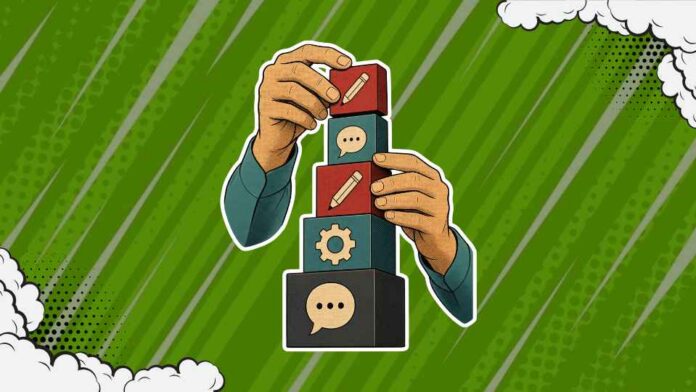

As organizations introduce artificial intelligence across business functions, workforce readiness is becoming a strategic challenge for HR leaders. McLean & Company has published its Define AI Skills Guide, a framework designed to help employers identify the technical and durable skills employees need to work effectively with AI. The guide recommends a four-step process covering strategic priorities, skills libraries, capability assessment and workforce development, with regular reviews as AI tools and organizational requirements evolve.
AI skills strategy must start with business priorities
McLean & Company’s central argument is that organizations should not begin workforce AI development by assembling a generic list of digital skills. Instead, HR teams should first understand what the business expects AI to achieve and identify the roles and functions that will be affected.
The firm’s guidance reflects a growing challenge for employers: introducing AI tools does not automatically create the workforce capabilities needed to use them productively. Employees may need to understand how to interact with AI systems, evaluate their outputs, recognize potential risks and apply human judgment when automated recommendations are incomplete or inaccurate.
Lisa Highfield, principal director of HR Research & Advisory Services at McLean & Company, says AI skills development needs to be connected to an organizational AI strategy. As agentic AI changes how work is performed, HR leaders must anticipate changes in responsibilities and build capabilities that can adapt as technology evolves.
This puts HR in a strategic role beyond coordinating training programs. It requires collaboration with business leaders, technology teams and functional specialists to determine where AI will change workflows and what employees will need to perform those jobs.
Four steps to build an organizational AI skills library
The Define AI Skills Guide provides a four-step process for translating AI priorities into workforce development plans.
1. Establish the driving need and scope. HR leaders should clarify why the organization needs AI skills and which functions or roles are most important to its objectives. This helps prevent broad training initiatives that are disconnected from actual business requirements.
2. Build an AI skills library. Organizations can start with McLean & Company’s prebuilt skills and customize definitions and proficiency expectations to reflect their own operating environment. The library is intended to provide a common framework for describing workforce AI capabilities.
3. Review and prioritize skills. HR teams should assess the proposed skills against the organization’s objectives and identify which capabilities are most important. Not every role requires the same level of AI knowledge, making prioritization important for allocating learning resources.
4. Embed skills across the organization. Selected capabilities should become part of upskilling programs, workforce planning, learning strategies and related HR practices. The skills library should also be reviewed as AI tools, business priorities and job requirements change.
The framework is designed to make AI skills development an ongoing workforce planning activity rather than a one-time training exercise.
Technical and durable skills form the foundation
A key part of the guide is its distinction between technical AI skills and durable skills.
Technical capabilities include AI tool fluency, responsible AI use and the ability to critically evaluate AI-generated outputs. These skills help employees interact with AI systems, understand their limitations and assess whether their results are appropriate for a particular task.
Durable skills include curiosity, flexibility and attention to detail. These capabilities support human judgment and adaptability as AI changes workflows and job responsibilities.
McLean & Company’s AI Skills Library contains 19 foundational skills: nine technical and 10 durable. Organizations can tailor the library to their workforce requirements, with functional subject matter experts helping test whether the definitions are understandable and relevant across different roles.
The distinction matters because AI readiness cannot be measured solely by how many employees know how to use a particular tool. Employees also need to question outputs, recognize errors, adapt to changing processes and understand when human intervention is necessary.
Agentic AI adds urgency to workforce planning
The emergence of agentic AI makes this skills challenge more complex. AI systems are increasingly being designed to carry out multi-step tasks and interact with business workflows, potentially changing the responsibilities of employees who previously performed those activities manually.
McLean & Company’s broader guidance on AI in HR identifies people, processes, technology, data and governance as interconnected foundations for successful AI adoption. It also emphasizes change management, targeted reskilling, data quality and human oversight.
For HR leaders, the implication is that AI skills planning needs to extend beyond basic tool training. Organizations must identify how roles could change, what decisions remain with employees and which capabilities will become more important as automated systems take on additional work.
McLean & Company also offers related support through its Enable Your AI Organizational Strategy Through HR workshop and AI Skills for Leaders training. These resources extend the guide’s focus from identifying workforce capabilities to supporting leadership and organizational implementation.
The larger issue for employers is not simply how quickly they can deploy AI. It is whether their workforce can use the technology responsibly, evaluate its results and translate it into business value. By connecting AI skills libraries with strategy, workforce planning and continuous learning, McLean & Company is positioning HR as a central partner in that transition.
Market Landscape
The AI workforce development market is shifting from general digital literacy programs toward structured skills strategies tied to business transformation.
Four trends are shaping this area:
-
AI skills taxonomies: Employers are developing consistent frameworks to define AI capabilities and proficiency expectations across job roles.
-
Role-based upskilling: Organizations are moving toward targeted training based on how AI changes specific functions and responsibilities.
-
Human skills alongside technical fluency: Critical thinking, adaptability, curiosity and judgment remain important as AI systems take on more tasks.
-
Continuous workforce planning: AI skills libraries need regular updates as tools, workflows and organizational priorities evolve.
McLean & Company’s approach sits within the HR research, advisory and workforce development segment. Its differentiator is a structured process for connecting AI strategy with skills identification and implementation across HR practices, rather than focusing solely on individual AI training courses.
Top Insights
-
McLean & Company argues that AI skills development should begin with organizational AI strategy rather than generic workforce training.
-
Its AI Skills Library contains 19 foundational capabilities, divided into nine technical skills and 10 durable skills.
-
The four-step framework connects business priorities with skills identification, prioritization and workforce-wide implementation.
-
The guide emphasizes regular reviews as AI technologies, organizational requirements and job responsibilities change.
-
Agentic AI increases the need for employees to combine technical fluency with critical thinking, adaptability and human judgment.
Join thousands of HR leaders who rely on HRTechEdge for the latest in workforce technology, AI-driven HR solutions, and strategic insights





