
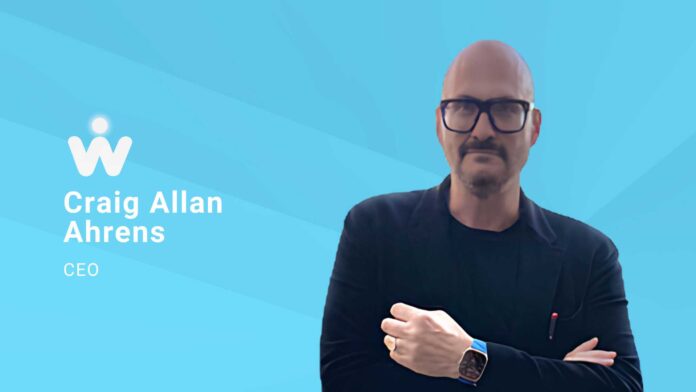

Craig Allan Ahrens, CEO, Worki AI, Inc.
Q1. The conversation around AI in HR often swings between extremes, saying it’s either replacing workers or solving everything overnight. Why do you think both of those narratives miss the mark?
Both narratives miss the same thing, which is the system underneath. The replacement narrative assumes AI can step in and take over functions that have never been mapped at the task level, and the everything-overnight narrative assumes the data, the workflows, and the governance are already in place to support that kind of change. Neither is true.
Replacement is the wrong frame because workforce strategy belongs to HR, not to AI. HR leads how people are recruited, developed, redeployed, and retained. And while AI is a part of how that strategy gets executed, it’s not a substitute for the strategy itself. The work that gets the most out of AI is the work HR has explicitly chosen to amplify.
The honest middle is connectivity first, then AI. The average health system runs 10 or more disconnected systems of record, and roughly 34% of every healthcare dollar already goes to that administrative overhead. Adding AI on top of that fragmentation just gives the existing problem a faster interface. AI delivers when the workforce data underneath it is unified, tasks are decomposed at the role level, and humans remain in the middle of every consequential decision. That’s the work most organizations have skipped, and it’s the work Worki was built to finish.
Q2. You’ve written about the real issue being a lack of connectivity across workforce systems. What does that actually look like inside organizations today?
Inside most healthcare organizations, the lack of connectivity shows up as a visibility gap that the executive team feels every quarter and the frontline workforce feels every shift. The data is in vaults that cannot read each other. Skills sit in the HRIS, credentials in the credentialing platform, scheduling in UKG or Kronos, learning history in HealthStream, and so on. Each platform was bought for a real reason and world well in its lane, yet none of them was ever designed to operate across the others.
Without a connected view, decisions are fragmented. Leaders overstaff in some areas and miss gaps in others, while internal candidates are invisible the moment a role opens. Without an existing platform that shows the whole picture in time, frontline employees feel the friction first. They get duplicate information requests, wait days for credential renewals that should take hours, and cannot see the career pathway in front of them because their own employer cannot see it either. The system has the data, but it can’t act on it.
The connective tissue is the gap, what we call the Fragmentation Tax,and it compounds until a CEO asks why administrative overhead keeps growing while the workforce keeps thinning.
Q3. Why is it so difficult for HR leaders to reduce administrative overhead, even when the mandate is clear?
The mandate is almost always clear. The path? Almost never. The reason has very little to do with HR leadership and almost everything to do with the level of detail the work has been broken down to.
Work has not been mapped at the task level, which means most organizations describe roles in job-description-length paragraphs, with no account for underlying tasks, how often each task occurs, who performs it, what credentials it requires, or how much administrative time it consumes. Without that level of detail, every cost reduction conversation defaults to headcount, which is the bluntest instrument available. In the absence of task-level visibility, AI deployment is a guess. WORKBank research found that roughly 46% of HR tasks fall into a Green Light Zone, where workers themselves want automation because it frees them for higher-value work. Meanwhile, 62% of all tasks remain fully human.
You cannot navigate that distribution from a job description; you can only navigate it from a task inventory. And when organizations skip that step, cost reduction produces cuts rather than change, which is why so many headcount actions are followed two quarters later by external hiring, agency spend, and overtime that together usually exceed the original savings. The work didn’t go away. It just shifted into a more expensive form.
Worki built Pathways, our task-level database for healthcare and other industry roles, to solve exactly this problem.
Q4. There’s no shortage of AI tools entering the HR space. Where do AI point solutions fall short for HR teams today?
Point solutions are good at what they do. They fall short at what nobody asked them to do, which is the orchestration of work across the rest of the stack. A recruiting AI brings in stronger candidates. A scheduling AI improves coverage. A learning AI personalizes content. Each of those is a real win, and we don’t ask customers to rip them out.
The breakdown happens between tools. Data has to be re-entered, decisions have to be reconciled, and the handoffs between recruiting, onboarding, scheduling, learning, and credentialing still rely on people stitching things together manually. The tools improve; the system as a whole does not. Worki’s role is to fill the in-between, feeding unified workforce intelligence into the tools a customer already trusts and pulling their outputs into a coherent workforce strategy. The point solution becomes part of a chain instead of an island.
The fastest way I describe this to a CHRO: keep what works, connect what does not, and stop paying the integration tax twice.
Q5. What does it mean to build workforce infrastructure instead of just adding another tool, and why does that distinction matter for HR teams?
Infrastructure is the layer that makes the other layers useful. Tools sit on top. Infrastructure sits between. Worki acts as a nervous system alongside the existing stack, sitting beside Workday, UKG, Oracle, ServiceNow, the ATS, the LMS, and the AI point solutions a customer has already chosen. We unify the workforce and HR data across those platforms into a single context layer without replacing any of them.
The platform organizes that capability into four key processes: Pathways maps how AI reshapes administrative tasks at the role level, Unify creates a single modular data identity across siloed systems, Amplifiers translate intelligence into operational action through AI agents with a Human Conductor governing every decision gate, and Infrasharing scales workforce intelligence and AI agent infrastructure across organizations.
The distinction matters because it changes what HR leaders can actually do. Instead of buying another tool that improves one function, the CHRO gets a system that delivers visibility across the workforce, coordinates work between platforms, redeploys capacity at the role and task level, and applies AI where it compounds rather than where it stays trapped in pockets.
Tanner Health is an early example of this approach in practice, using Worki’s Career Amplifier to help support workforce engagement, career mobility, and employee evolution alongside AI.
Q6. Skepticism around AI is still high, especially in HR. What does responsible, effective AI deployment actually look like in workforce operations?
Responsible AI deployment looks like restraint, governance, and evidence, in that order. With restraint, not every task should be automated. Stanford has a framework that draws a clean line between what workers want automated and what they want to keep, and we respect that line in every deployment. We start with the Green Light Zone, where the workers doing the work agree the task should be amplified, and we leave the relational, judgment-heavy, and ethically charged tasks to humans.
From there, governance means humans stay in the middle of every decision gate. Every Worki Amplifier is coordinated by a Human Conductor who reviews and approves consequential actions before they reach a personnel record, a credential, or an external communication. The audit trail is regulator-ready by design, not added later under pressure.
The final piece is evidence, as every deployment carries measurable outcomes. We define the metric, the baseline, and the target before a single agent is deployed, from counselor capacity, credential cycle time, time to internal fill, retention impact, to administrative cost reduction. If the numbers do not move, we have not done our job.
Responsible AI is not a slogan. It is a sequence of choices that make the rest of the program defensible to the board, the workforce, and the regulators at the same time.
Q7. As AI becomes more embedded in HR, why is it critical to keep humans at the center of decision-making?
AI surfaces patterns. Humans carry accountability. Workforce decisions almost always involve context, tradeoffs, and consequences for real people, and those things do not live cleanly in data. AI handles the repetitive, high-volume work, including verifying credentials, drafting renewal communications, screening resumes against a structured rubric, and mapping the next three career steps for an employee. The kind of work that, done by humans alone, swallows administrative capacity and produces inconsistent results.
But humans hold the decisions, the relationships, and the accountability. The career counselor still has the conversation with the employee at the moment of professional uncertainty. The credentialing leader still owns the call on whether a clinician is fit to practice. The CHRO still answers to the board. AI gives those humans better visibility, better starting points, and more capacity to do the part of the job only they can do.
At Tanner Health, a regional health system where first-year attrition rates range from 45% to 55%, Worki is helping career counselors support far more employees without adding headcount. The deployment is on track to triple counselor capacity, with more than 2,000 employee career pathways planned for activation.
If you remove humans from that loop, you gain speed and lose trust. The whole point of the architecture is to give HR teams more leverage, not less ownership.
Q8. Looking ahead, what does a fully connected, AI-enabled workforce function look like, and what should HR leaders be doing now to move in that direction?
A fully connected, AI-enabled workforce function shifts HR from storing information to enabling action. CHROs gain real-time visibility into workforce gaps, while decisions move from broad headcount planning to role- and task-level execution.
Ultimately, internal mobility becomes the default. Employees are surfaced for new opportunities before external hiring begins, and AI helps route targeted upskilling pathways. With nurse turnover costing roughly $56,300 per replacement, retaining and redeploying talent preserves both dollars and institutional knowledge.
At the same time, HR teams spend less time reconciling fragmented systems and more time focused on workforce strategy. Administrative work that consumes 30-40% of HR capacity today moves into governed AI execution under Human Conductor oversight.
For HR leaders, the first step is inventorying systems of record. Most organizations uncover 10 or more disconnected platforms and significant administrative waste tied to reconciliation. From there, start by amplifying one role, typically a career counselor, credentialing specialist, or onboarding coordinator, then expand over time.
HR remains the leader of workforce strategy and AI helps execute it. Worki is the connective layer that brings systems together and turns workforce data into action.
About Worki
Worki is building the connecting AI infrastructure layer for dramatically lowering costs and improving productivity in healthcare workforce and HR operations. The company’s AI-native infrastructure sits between the systems health systems already use, including Workday, UKG, Oracle, ServiceNow, AI point solutions, ATS, LMS, and others, unifying workforce and HR data into the connective tissue that provides a context layer powering AI-driven decisions and the development of AI agents around functional roles. Four key capabilities organize the platform: Pathways (mapping how AI reshapes healthcare administrative tasks), Unify (creating a single modular data identity across siloed systems), Amplifiers (translating intelligence into operational action via agents that amplify traditional HR roles), and Infrasharing (scaling workforce intelligence and AI agent infrastructure across organizations).
About Craig Allan Ahrens
Craig Allan Ahrens is a serial entrepreneur and domain expert in healthcare operations, workforce, and education. Prior to founding Worki, he pioneered the “Uber for healthcare” thesis, building the industry’s first AI-enabled W-2 workforce marketplaces. His track record includes scaling YC-backed CareRev to over $300M in revenue and building ShiftMed’s W-2 model into a $1B+ platform supporting 20+ health systems and over a million clinicians. He specializes in creating intelligent shift cascading, internal float pools, and dynamic career pathways that reduce administrative burden for frontline clinicians by over 30%. Today, Craig is architecting Worki’s shared AI workforce infrastructure to fundamentally collapse healthcare administrative overhead and bridge the divide between founders, VCs, and health system leaders.





