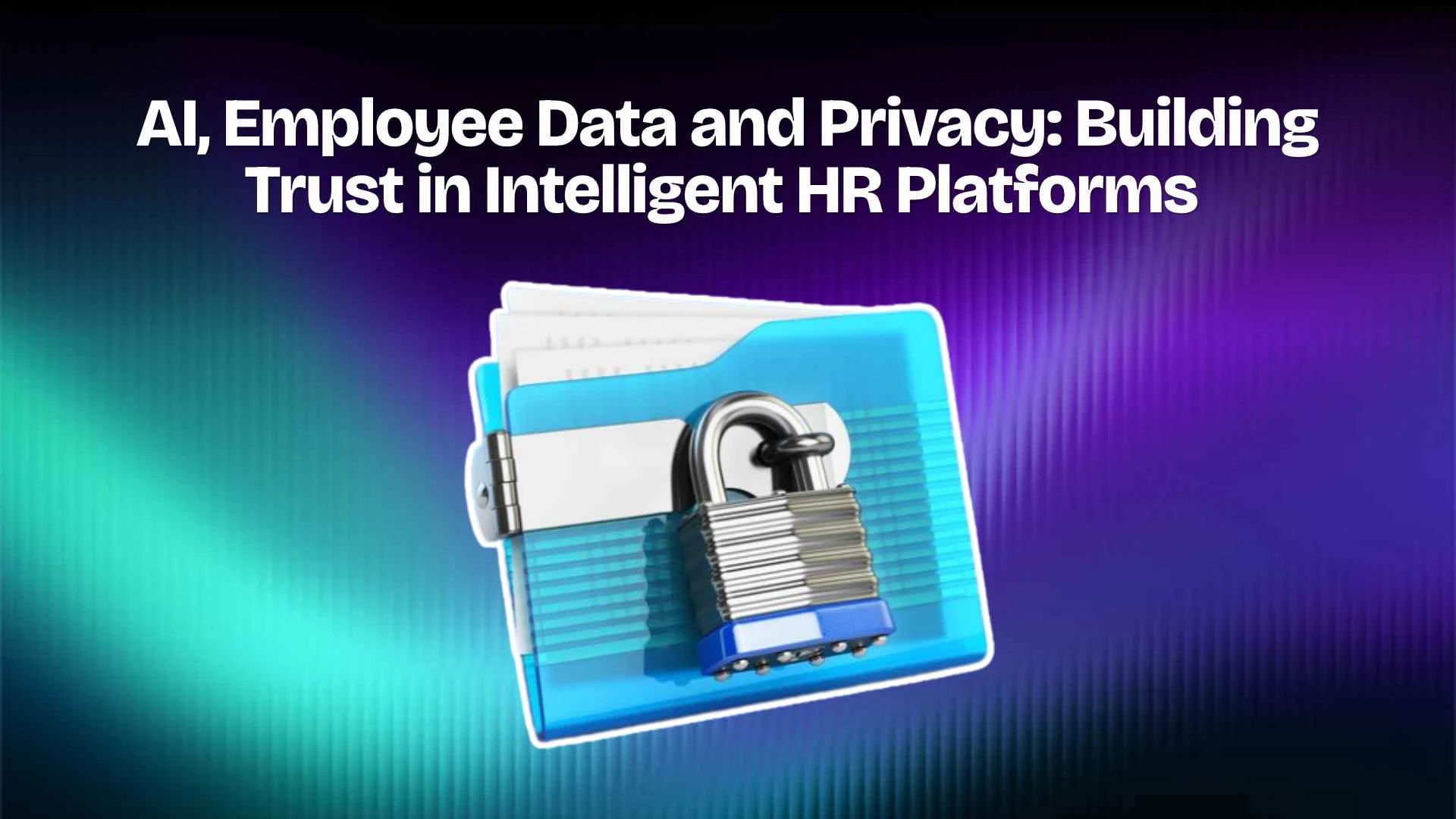
Most HR leaders have now stopped if their platform uses AI. Now they want to know about the employees and who has the access to the data. That answer decides which tools teams adopt and which ones they quietly avoid. New rules in the EU and India now require a clear explanation of why they use the data of their employees. For HRTech buyers and vendors, trust is now the deciding factor and not for compliance requirements.
What types of employee data do AI-powered HR platforms collect and process?
AI-powered HR platforms manage more than basic payroll and leave records. They process IDs, bank records, performance reviews, and biometric attendance. They now track behavioral signals like login patterns, collaboration activity, and sentiment from written feedback.
Every layer carries its own risk. Payroll data is sensitive but expected. Flight-risk scores and “potential” ratings, because it is created by the system without employee input. Treating that derived data as sensitive from day one makes it mature employee data privacy.
How AI-powered productivity tracking affects employee privacy
- Monitoring is now the baseline. As AI in human resources management evolves, Gartner’s note shows that workplace tracking is now expected and advises the CHROs to focus on the useful insights rather than micro-managing.
- Intent drives results. Tracking your team’s workload helps managers balance tasks while tracking individual clicks encourages people to look busy.
- Shadow AI signals expose a trust gap. According to Gartner’s Q1 2026 survey of 12,004 employees across 40 companies, 88% of employees with corporate AI access still use AI tools for work.
- Unapproved tools create security risks. When employees use their personal tools instead of the company platform, then sensitive company information leaves your secure environment.
How identity and access management protects sensitive HR data
- IAM turns policy into actions. Written privacy policies fail because every HR admin has unrestricted access to employee’s policies.
- Keep access strictly limited. Role-based rules, admin multi-factor authentication, and temporary access for sensitive cases limit the exposure.
- AI and industry rules complicate access. Banks protect records with strict security, while managers must restrict third-party vendor access. Within intelligent HR platforms, AI agents need strict, limited permissions instead of open access to the entire HR data lake.
The future of employee consent and control over personal data
The regulation is moving slower than the plan. The EU’s Digitals Omnibus on Workforce has shifted enforcement for high-risk workforce systems from August 2, 2026, to December 2, 2027. AI-powered HR software is used for hiring, promotions, firing, task allocation, or performance review tracking to stay in the high-risk category.
The industry is moving on the firmer deadline by following the Consent Manager framework launched on November 13, 2026, with full compliance due by mid-May 2027. HR platforms in India will operate with granular, revocable, and auditable content by making blanket onboarding “I agree” clauses obsolete.
Employee-facing dashboards will soon become standard by showing what data is collected, why, who accessed it, and how to contest AI decisions. Vendors that build transparency gain trust and close the deal faster.
Key metrics for evaluating employee data privacy programmes
| Employee data protection metric | What to measure |
| Data inventory coverage | Percentage of HR data fields mapped to an owner, purpose, and retention limit. |
| Access hygiene | Number of privileged accounts, quarterly audits, and offboarding speed. |
| Consent quality | Percentage of granular current consents and opt-out processing time. |
| Request turnaround | Resolution speed for employee access, correction, and grievance requests. |
| Incident response | Mean time to detect and report a data breach. |
| AI governance | Percentage of AI HR features with impact assessments and human review. |
| Employee trust | Pulse-survey results on whether employees understand and feel comfortable with how their data is used |
Trust Is the Metric That Matters
The HR platforms won’t win alone on smart AI tools, they will win when they show transparency to their employees on demand, what data they hold, and why. Every control, from access rules to consent flows, comes down to one question: “Do employees trust their data is safe?”
When gaining that trust, privacy becomes a product advantage rather than a compliance burden. It boosts adoption, reduces workarounds, and improves compliance across the world. The key is “great features get shortlisted, but trust gets you renewed.”
Build Trust with Smarter, More Secure HR Technology