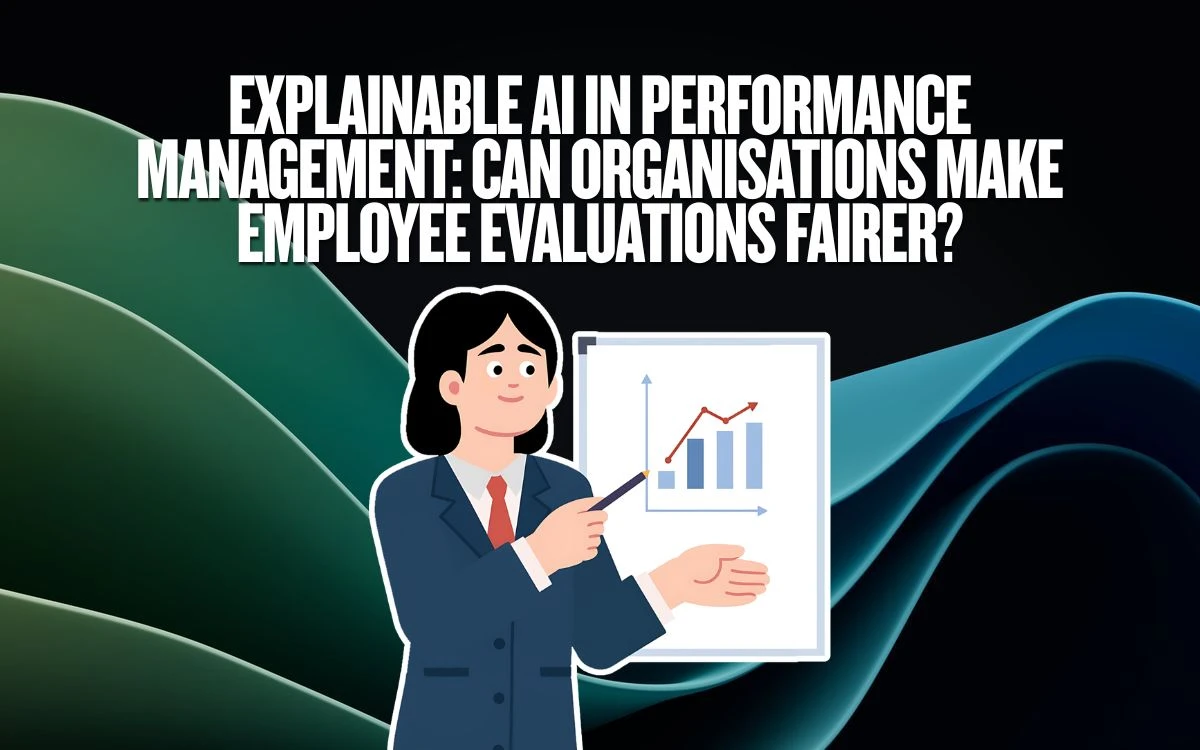
When you ask HR leaders, “Why do they use AI in performance reviews?” and the answer you will receive is, “It is for fairness.” This is because they want less guesswork rating and no manager bias. If the score is fair yet it cannot be explained, then it is considered an unfair one. To solve this gap, explainable AI is built.
What Is Explainable AI and Why Does It Matter in Performance Management?
Explainable AI is the technology that lets people see the exact reason behind the AI’s score, rankings, or recommendations. When you say to someone, “The system gave you a low score,” this explains only what happened, not the specific reason. A real explanation should sound like this, “You took a longer time to close the tickets in the last three quarters, while your teams kept the same track.
This is important because these ratings decide who gets a hype in the pay, promotions, and layoff. According to Gartner’s prediction, by 2028 there will be an increase in demand for explainable AI in the companies for monitoring tools in 50% of generative AI deployments. In December 2025 there was a survey on how AI saved the managers 4 hours of review time, but using it without strict and clear rules creates major risks for the organizations.
AI-Powered Performance Reviews: Opportunities and Limitations
| Opportunities | Limitations |
| AI drafts review notes in seconds and reduces HR’s heavy paperwork that makes review tasks stressful. | Tools give scores without showing their work, so a manager who cannot explain a rating cannot defend it. |
| It spots patterns across project data that a single manager would miss. | AI agents make it unclear who owns a decision unless clear rules, visibility, and ownership are built into workflows. |
| About 70% of companies already use AI in at least one of their HR tasks to make their work less complicated. | Tools work like “black boxes,” which makes hidden bias hard to spot. |
| Real-time insights can replace the once-a-year review. | Sample risk: An IT firm’s AI leans too much on billable hours, so consultants on long, messy client projects quietly score lower than peers on neat, short jobs. |
How Workplace Visibility Can Influence Performance Assessments
The AI review technologies are usually reworded for the work they easily track. When the system collects data from CRMs, code changes, or calendars, then the visible tasks get high ratings, whereas mentoring partner-led deals and deep-focused work get ignored. For hybrid B2B teams this makes favors towards the visible workers, which look like hard proof. To fix this, treat the AI rating as one clue and not the final solution. The managers should also be able to explain the evidence that led to the AI employee assessment.
How Employees Can Challenge or Question Automated Evaluations
- Display the data utilized. The work metrics and data points that influenced their score should be visible to employees.
- Describe it in simple terms. A manager should provide an explanation for each grade without putting the blame on “algorithm.”
- Let a human make the ultimate decision. An authorized, human reviewer should be allowed to make changes in the ratings and not to add complaints.
- Keep track of each appeal. You can identify hidden bias or inaccurate data before they become trust or legal issues by keeping an eye out for trends in employee resistance.
Protecting Employee Privacy in AI-Powered Monitoring Systems
When AI tools track too many employees, they make more mistakes, and the employees feel invasive. Only tracks data connected to the real job goals. Do not use influence performance assessments to decide your payments or promotions. At the final stage, communicate to your employees what you track and for how long.