
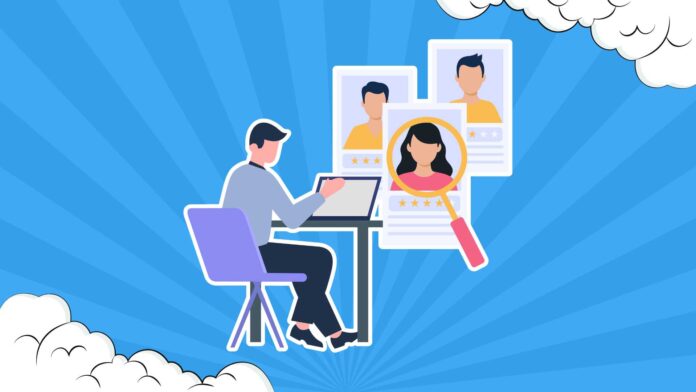

As artificial intelligence transforms job applications, employers are increasingly turning to independent background verification services to validate candidate credentials, employment histories, and professional claims. A growing number of hiring leaders say AI-generated resumes and applications are making it harder to assess authenticity, prompting organizations to strengthen due diligence processes for critical hiring decisions.
The rapid adoption of generative AI in recruitment is creating a new challenge for employers: determining whether increasingly polished candidate profiles accurately reflect real-world qualifications and experience.
According to recent survey data, 64% of hiring managers believe AI-enhanced resumes have made candidate skills more difficult to verify, while 61% say AI-generated applications are slowing the hiring process. As job seekers use AI tools to optimize resumes, cover letters, and professional profiles, organizations are responding by placing greater emphasis on independent verification and background investigations.
The trend is becoming particularly visible in Canada, where employers are increasingly seeking third-party validation of employment histories, professional credentials, business affiliations, and executive-level experience before extending offers.
Toronto-based investigation firm Investigation Hotline reports growing demand for employment verification, corporate intelligence services, and integrity checks, especially for executive hires, financial positions, and roles involving access to sensitive information.
The shift reflects a broader transformation in talent acquisition. Historically, recruiters struggled with limited information about candidates. Today, the challenge is often the opposite: an abundance of information that can be difficult to authenticate.
Generative AI platforms can rapidly create professional summaries, optimize career narratives, and tailor applications to specific job descriptions. While these tools help candidates present themselves more effectively, they also increase the burden on employers to distinguish between strong communication skills and verified professional experience.
As a result, organizations are expanding verification efforts beyond traditional reference checks.
Investigation firms and background screening providers report growing interest in validating employment histories, professional certifications, job responsibilities, executive experience, business ownership interests, and potential conflicts of interest. In some cases, employers are also reviewing regulatory records, litigation histories, and corporate affiliations to better understand potential risks associated with senior-level candidates.
The trend is especially pronounced for leadership positions where hiring decisions can have significant operational, financial, and reputational consequences.
According to industry research from Gartner and Deloitte, trust and governance are becoming increasingly important considerations as AI adoption expands across human resources functions. While AI can improve sourcing efficiency, candidate matching, and recruitment automation, organizations are also investing in stronger verification processes to mitigate risks associated with inaccurate or misleading information.
The issue extends beyond recruitment.
Companies are increasingly applying similar due diligence practices when evaluating partnerships, mergers and acquisitions, investments, vendors, and strategic business relationships. As digital information proliferates, organizations are placing greater value on independently verified intelligence rather than relying solely on publicly available profiles or self-reported data.
This shift is creating opportunities for technology providers specializing in background screening, identity verification, compliance monitoring, and corporate intelligence. Vendors across the HR technology ecosystem are developing new solutions that combine automation with human-led investigations to improve verification accuracy.
Major enterprise platforms from Microsoft, Salesforce, Oracle, Workday, and LinkedIn continue expanding AI-powered recruiting capabilities. At the same time, background screening providers are investing in technologies that help organizations verify credentials, employment records, and professional histories more efficiently.
The convergence of AI-powered recruitment and enhanced verification practices represents an emerging dynamic within talent acquisition. As application generation becomes increasingly automated, the value of trusted data and validated information rises correspondingly.
For HR leaders, the challenge is finding the right balance between efficiency and diligence. AI tools can accelerate hiring workflows, improve candidate engagement, and reduce administrative burdens. However, organizations must ensure that speed does not come at the expense of informed decision-making.
The growing emphasis on independent verification suggests that trust may become one of the most important competitive differentiators in modern recruitment.
As AI-generated content becomes more sophisticated and professional networking increasingly occurs through digital channels, employers are likely to continue strengthening due diligence processes. The future of hiring may depend not only on access to information, but on the ability to verify it.
For organizations making high-stakes hiring decisions, independent verification is increasingly being viewed as a critical component of risk management, workforce planning, and corporate governance in the AI era.
Market Landscape
The global background screening and employment verification market is evolving rapidly as AI transforms recruitment workflows. Gartner, Deloitte, and IDC have identified trust, governance, and workforce risk management as growing priorities for HR leaders adopting generative AI technologies. As organizations deploy AI-driven sourcing, screening, and talent acquisition tools, demand is rising for credential verification, identity validation, compliance monitoring, and corporate intelligence services. The convergence of AI-powered recruitment and enhanced due diligence is creating a new category of workforce risk management solutions focused on ensuring hiring decisions are based on verified information rather than digital presentation alone.
Top Insights
- AI-generated resumes and applications are increasing employer concerns around candidate verification, prompting greater reliance on background screening and due diligence services.
- Survey findings show 64% of hiring managers believe AI-enhanced resumes make skills harder to verify, while 61% report slower hiring processes.
- Organizations are increasingly validating employment histories, credentials, business affiliations, and potential conflicts of interest before making key hiring decisions.
- Executive, financial, and sensitive-access roles are generating the highest demand for independent verification and corporate intelligence investigations.
- The rise of generative AI is accelerating demand for trusted workforce data, compliance tools, and risk management solutions across talent acquisition.
Join thousands of HR leaders who rely on HRTechEdge for the latest in workforce technology, AI-driven HR solutions, and strategic insights

Business Wire, a Berkshire Hathaway company, is the global leader in press release distribution and regulatory disclosure. Public relations, investor relations, public policy and marketing professionals rely on Business Wire for secure and accurate distribution of market-moving news and multimedia. Founded in 1961, Business Wire is a trusted source for news organizations, journalists, investment professionals and regulatory authorities, delivering news directly into editorial systems and leading online news sources via its multi-patented NX network. Business Wire’s global newsrooms are available to meet the needs of communications professionals and news media worldwide.




