
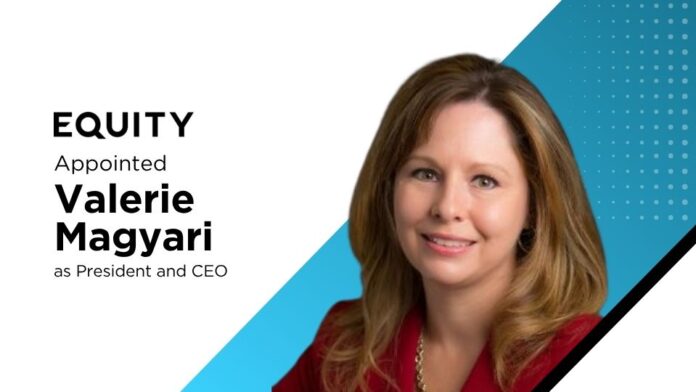

Engineering consultancies are facing a dual challenge: preserve highly specialized technical knowledge while preparing the next generation of leaders to manage increasingly digital, data-intensive projects. Equity Technology Group is addressing that transition at the executive level. The company has appointed Valerie Magyari as president and CEO, while co-founder David Osage moves from the top executive role to Technical Fellow, keeping nearly five decades of engineering expertise inside the organization.
Equity Technology Group Changes CEO as Founder Shifts to Technical Fellow Role
Leadership succession at engineering firms often involves more than replacing an executive. It can determine whether decades of specialized technical knowledge remain embedded in the organization or become concentrated in a small number of retiring experts.
Equity Technology Group is taking a deliberate approach to that challenge.
The engineering and consulting company said Valerie Magyari has been appointed president and CEO by its board of directors, replacing David Osage, P.E., ASME Fellow. Osage, who co-founded Equity in 2002, has stepped down as CEO and will continue with the company as a Technical Fellow.
The transition gives Equity a new executive leader while retaining its founder’s expertise in fitness-for-service (FFS), fracture mechanics, stress analysis and thermal analytics.
Osage’s career spans nearly 50 years and includes earlier work at Exxon and BP. At Equity, he helped build the company around specialized engineering analysis and consulting. In his new role, the company says he will focus on developing next-generation technologies into codes and standards for broader industry use.
That is an increasingly important model for technical organizations whose competitive advantage depends on specialized expertise.
Preserving Expertise as Engineering Becomes More Digital
Engineering companies have accumulated vast bodies of knowledge through field experience, project data and technical standards. Much of that knowledge is difficult to transfer through conventional onboarding.
The challenge becomes sharper when senior engineers retire or move away from operational roles.
A Technical Fellow position can provide a bridge between institutional knowledge and organizational modernization. Instead of removing a technical expert from the company entirely, the role allows that individual to concentrate on research, standards, technology development and mentoring while another executive manages operations and growth.
Equity’s leadership transition follows that pattern.
Magyari brings 30 years of leadership experience and most recently served as executive vice president, overseeing operations and helping shape corporate strategy. According to Equity, she also led major consulting projects, contributed to revenue growth and strengthened governance practices associated with the company’s employee stock ownership plan, or ESOP.
The combination is notable because Equity is not simply separating technical leadership from business leadership. It is creating two complementary roles.
Magyari will be responsible for the organization’s next phase of growth and execution. Osage will focus on technical development and translating emerging engineering methods into industry codes and standards.
For an employee-owned company, that distinction can also influence how the organization approaches talent.
Equity’s ESOP structure means employees have a financial stake in the company’s long-term performance. Leadership development, succession planning and knowledge transfer therefore have implications beyond the executive suite.
Engineering Firms Are Becoming Technology Companies
The broader engineering consulting market is also changing.
Modern engineering analysis increasingly depends on computational modeling, simulation, digital twins, advanced analytics and specialized software. Engineers working on industrial assets can use increasingly sophisticated tools to assess structural integrity, remaining life, thermal performance and failure risk.
That creates a growing overlap between engineering expertise and technology development.
For Equity, Osage’s technical-fellow mandate appears designed around that convergence. Turning engineering methods into codes and standards can create a pathway for specialized knowledge to become repeatable tools that can be used across projects and potentially across the wider industry.
The company’s focus on FFS and fracture mechanics is particularly relevant to industries where aging infrastructure remains a major concern.
Fitness-for-service assessments help engineers determine whether equipment containing defects, degradation or damage can continue operating safely and under what conditions. Such assessments can involve stress analysis, fracture mechanics, material behavior and operating conditions.
Digital engineering tools can make these assessments more efficient, but they do not eliminate the need for expert judgment.
That is where technical fellows can play an important role.
What the Transition Means for the Workforce
From an HR technology perspective, Equity’s succession also illustrates a larger workforce trend: companies are increasingly trying to capture institutional knowledge before it leaves with senior employees.
Knowledge-management systems, learning platforms, skills databases and AI-assisted documentation can help, but technical expertise is not easily converted into searchable documents.
Organizations still need experienced professionals who can interpret results, challenge assumptions and teach less-experienced engineers how to approach unfamiliar problems.
That makes the combination of senior technical fellows and structured talent development particularly relevant.
Magyari said her focus would be supporting Equity’s employees so they can deliver technical excellence and innovative solutions while contributing to long-term growth.
That approach places employees at the center of the company’s next phase rather than treating succession as a purely executive change.
For HR leaders at engineering and industrial companies, the lesson is broader: succession planning is increasingly a knowledge-management strategy.
A company can replace a title relatively easily. Replacing the judgment behind decades of engineering decisions is considerably harder.
Competing Models for Technical Leadership
Large engineering organizations such as AECOM, Jacobs, Bechtel and Emerson have developed extensive technical leadership structures alongside conventional executive hierarchies. Professional engineering societies such as ASME also play an important role in converting engineering knowledge into standards used across industries.
Smaller specialist consultancies have a different advantage: they can often move technical expertise directly into client work and product development without the organizational layers of a multinational engineering company.
Equity’s new structure appears designed to preserve that specialist model while building greater executive capacity for growth.
The success of the transition will ultimately depend on execution. Magyari inherits responsibility for the company’s growth ambitions, while Osage will need to turn his technical experience into technologies and standards that extend beyond individual consulting engagements.
For the workforce, the most important outcome may be whether that knowledge becomes transferable.
If Equity can successfully connect its senior technical expertise with digital tools, standards development and the next generation of engineers, the leadership change becomes more than a CEO succession. It becomes a mechanism for converting institutional knowledge into organizational capability.
Market Landscape
Engineering and industrial consulting firms are entering a period where specialized expertise, digital engineering and workforce succession increasingly overlap.
Four trends are shaping the market:
Digital engineering: Simulation, computational analysis, digital twins and advanced analytics are becoming integral to industrial engineering workflows.
Aging infrastructure: Asset owners need sophisticated methods to determine whether aging equipment can continue operating safely and economically.
Knowledge transfer: Companies are looking for ways to retain specialized expertise as experienced engineers retire.
Skills-based workforce management: Engineering organizations increasingly need to identify critical skills, map expertise and build internal leadership pipelines.
The competitive landscape includes large engineering firms such as AECOM, Jacobs and Bechtel, industrial technology companies such as Emerson and specialist engineering consultancies.
For HR teams, the technology opportunity extends beyond recruiting. Learning-management systems, skills intelligence and knowledge-management tools can help organizations identify critical expertise and connect senior specialists with emerging talent.
AI may eventually accelerate this process by capturing project documentation and surfacing relevant engineering knowledge. But high-consequence engineering decisions still require human validation, professional accountability and domain expertise.
Equity’s leadership structure highlights why: the value of technical knowledge is not simply in storing information, but in knowing how and when to apply it.
Top Insights
- Equity appointed Valerie Magyari CEO while retaining founder David Osage as Technical Fellow, combining executive succession with preservation of specialized engineering knowledge.
- Osage will focus on technology and standards development, potentially turning decades of expertise in fracture mechanics and fitness-for-service into reusable industry capabilities.
- Magyari brings operational and strategic experience, positioning Equity to pursue growth while maintaining its employee-owned culture and technical focus.
- Engineering workforce planning increasingly includes knowledge transfer, as companies seek to retain specialized expertise that cannot easily be replaced through conventional recruiting.
- Digital engineering is changing consulting models, connecting advanced analytics, simulation and software with traditional engineering judgment and professional standards.
Join thousands of HR leaders who rely on HRTechEdge for the latest in workforce technology, AI-driven HR solutions, and strategic insights





